Oil tokens – what are they, how do they work, and how to invest (SOS, UGOR) in 2026?

 Prefer us on Google

Oil tokens are a growing category in the cryptocurrency market that bridges the energy sector with blockchain technology. They allow investors to gain exposure to the oil market digitally, without the need to purchase physical commodities. In this article, we explain what oil tokens are, how they function, and how to invest in projects like SOS or United Global Oil Reserve (UGOR) in 2026.
If you are just starting out, also see our guide: How to start investing in cryptocurrencies in 2026.
What are oil tokens?
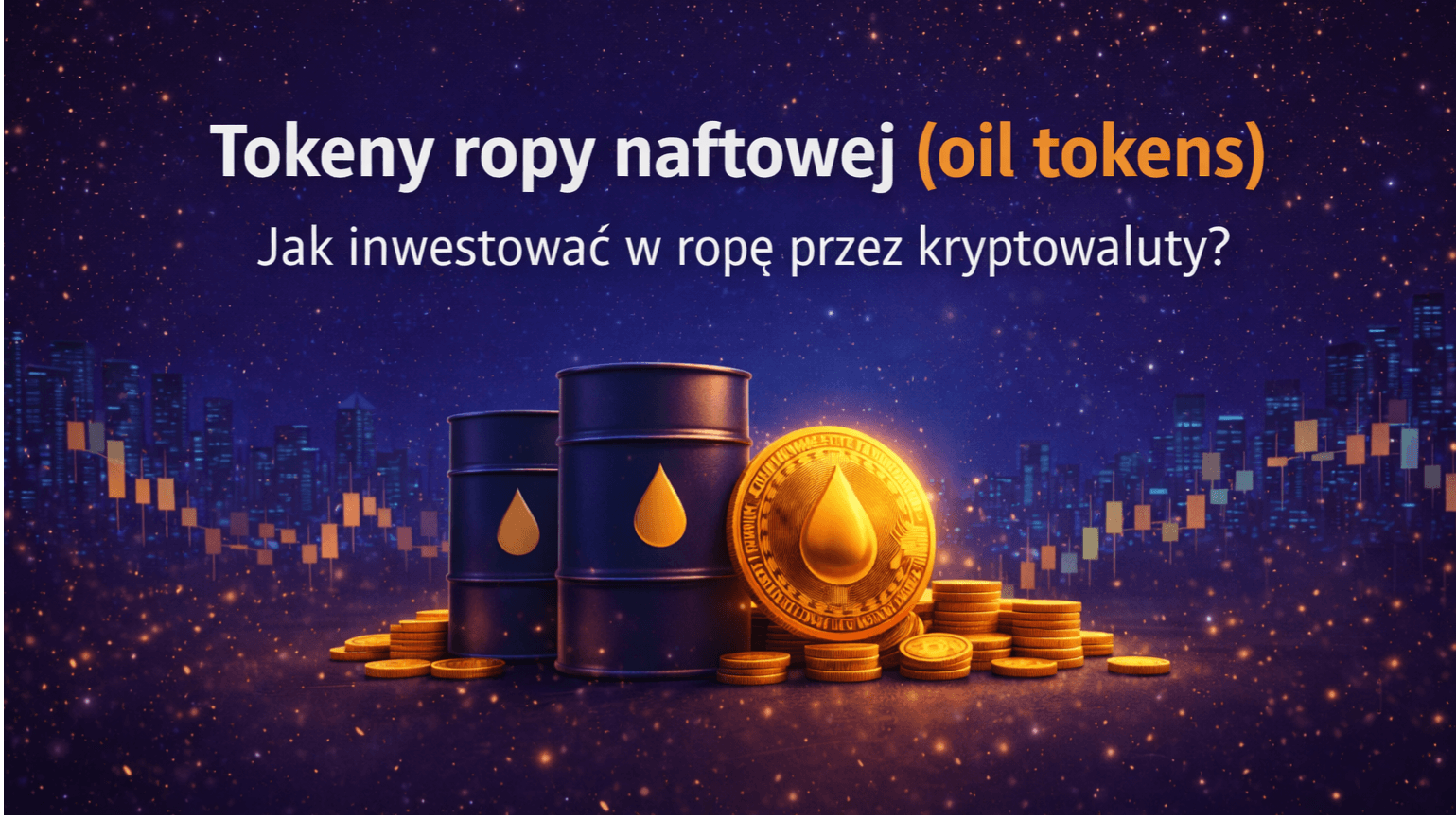
Oil tokens are cryptocurrencies inspired by the energy sector that relate to the oil market or, more broadly, the global commodities market. In practice, this means that a given token may be linked to themes such as oil reserves, commodity prices, or geopolitical events affecting the global energy market.
However, it is worth remembering that not every cryptocurrency related to oil has real backing in physical assets. Many projects operate on a speculative model where the token does not represent actual oil but is based on investor interest and current market trends.
What is oil tokenization?
Tokenization is a process in which real-world assets – such as crude oil – are represented on the blockchain in the form of digital tokens. Theoretically, such a token could represent a specific amount of oil barrels or a share in global oil reserves.
In practice, many projects do not offer a direct link to physical oil and rely mainly on market narrative.
Therefore, before investing, it is worth verifying whether a given project actually represents assets or merely uses marketing based on the topic of oil.
How do oil tokens work?
The mechanism of oil tokens depends on the specific project, but in most cases, they are digital assets of a speculative nature. This means that the price of the token is shaped primarily by supply, demand, and sentiment in the cryptocurrency market, rather than directly by the value of physical oil.
Some projects declare a link to oil prices or the global energy market, but in practice, the correlation with oil prices is often limited. Trends in the cryptocurrency market, community interest, and geopolitical events – especially those related to supply and global tensions – have a much greater impact.
From a technological standpoint, oil tokens function on the blockchain and use smart contracts to process transactions. This enables fast, global trading without intermediaries, both on centralized platforms and decentralized exchanges. As a result, investors can easily buy, sell, and transfer tokens using the infrastructure of digital financial markets.
What factors influence the price of oil tokens?
The price of oil tokens depends on many factors and is not always directly linked to the price of oil. In practice, oil tokens react mainly to the situation in the cryptocurrency market and investor interest.
Key factors:
- Oil price and energy market
Events related to crude oil, such as price changes or the geopolitical situation, can influence demand for oil tokens. - Market narrative and hype
Oil tokens often rise when interest in topics related to energy and the global oil market increases. - Trader activity and trading volume
Higher trading means greater liquidity and higher price volatility for tokens. - Liquidity on exchanges and DEXs
Low liquidity can cause large price fluctuations even with small transactions. - Situation in the cryptocurrency market
Gains or losses in the cryptocurrency market also affect oil tokens.
Conclusion: The price of oil tokens depends not only on oil but primarily on the cryptocurrency market and investor interest.
How do oil reserves work in oil reserve projects?
Projects described as oil reserve are based on the premise that the token represents a share in oil reserves or is in some way linked to global oil reserves. In theory, this would mean that the digital token reflects the value of the physical commodity or provides exposure to the oil market without the need for direct purchase.
In practice, however, such assumptions are rarely fully realized. Many projects use the concept of strategic oil reserves mainly as an element of marketing narrative. In reality, tokens often do not represent actual oil reserves or physical goods, and their value stems primarily from user activity and market demand.
Therefore, before investing, it is worth exercising extreme caution and thoroughly verifying the project. It is crucial to check whether the project has a real connection to the oil market, whether it possesses infrastructure related to commodity supply, and whether it offers transparent mechanisms confirming asset backing. In most cases, we are dealing with a concept rather than actual access to reserves.
Key oil tokens
Among thematic coins related to oil, projects such as Strategic Oil Supply (SOS) and United Global Oil Reserve (UGOR) attract particular attention. However, it is worth remembering that most oil tokens are speculative in nature and are not linked to actual oil reserves.
SOS token
Strategic Oil Supply (SOS) is a token that fits into the trend of cryptocurrencies inspired by energy. Its price depends mainly on market interest and trader activity.
The token is particularly sensitive to market narrative and news related to crude oil, which means its price can rise quickly – but also fall sharply. Trading takes place mainly on decentralized exchanges, where liquidity and volatility are key.
United Global Oil Reserve (UGOR)
United Global Oil Reserve (UGOR) is a project based on Solana that uses the concept of global oil reserves as the main element of its narrative.
In practice, it is a meme token that does not provide access to actual oil resources. Its value is based primarily on hype, the community, and market trends. An additional risk is the fact that there may be different versions of the token (different contracts), so it is worth thoroughly verifying the project before purchasing.
Other oil tokens
Besides SOS and UGOR, other tokens related to oil and energy are appearing on the market. Most of them:
- have no real backing in oil
- operate speculatively
- use geopolitical themes and market news
Some projects are trying to develop the concept of oil tokenization (RWA), but they are at a very early stage and involve additional challenges, such as regulations, audits, or supply infrastructure.
Are oil tokens on Solana the future of the cryptocurrency market?
Solana is one of the most popular blockchain platforms, known for fast and cheap transactions. It is no surprise, then, that many tokens related to oil are being created in this ecosystem. The Solana network offers high liquidity, developed infrastructure, and easy access to decentralized exchanges.
A token based on Solana can be traded quickly on the global market, without intermediaries and with low fees. Thanks to this, investors have easier access to new projects and can react faster to market changes.
Despite these advantages, it is worth remembering that the success of oil-based cryptocurrencies does not depend solely on technology. Trends, market narrative, and user interest still play a key role. These are what influence the increase or decrease in the value of these cryptocurrencies the most.
How to invest in oil through cryptocurrencies?
Investing in oil through cryptocurrencies is relatively simple but requires an understanding of the market.
Step by step:
- Choose an appropriate exchange or platform
- Create an account and deposit funds (e.g., in USD or stablecoins such as USDT or USDC - read more about stablecoins).
- Find the token you are interested in (e.g., SOS or UGOR)
- Execute the purchase transaction
- Monitor the market and manage risk
Trading can take place both on centralized platforms and decentralized exchanges. It is worth remembering that the volatility of these assets is high, and investing is speculative in nature.
Does a meme token related to oil have investment value?
A meme token is a type of cryptocurrency whose value is based primarily on the community, trends, and market narrative. In the case of tokens related to oil, current events have a major impact, especially those related to politics and the energy market. An example is the Trump Oil Reserve Coin, which uses the theme of oil and geopolitics to attract investor attention.
However, it is worth remembering that these are high-risk assets. Tokens of this type can rise quickly but also fall sharply, so meme tokens are best treated as short-term speculation rather than a stable investment.
What should you pay attention to when choosing oil tokens?
Before investing, it is worth thoroughly checking the project, as many oil tokens are speculative in nature.
Pay attention to:
- Official token contract
Make sure there is one correct address and avoid clones. - Liquidity and trading activity
Low liquidity can make selling difficult and cause large price fluctuations. - Trading venue (CEX / DEX)
Check where the token is available and whether trading is stable. - Real project fundamentals
Does the token have a use case, or is it based only on narrative and hype? - Transparency and team
Whitepaper, communication, and partnerships increase the credibility of the project.
Conclusion: the more specifics and transparency, the lower the investment risk.
Advantages and risks of investing in oil tokens in 2026
Investing in oil tokens can be attractive, but it also carries significant risk.
Advantages:
- access to the global oil market without buying the physical commodity
- high liquidity and fast transactions
- possibility of 24/7 trading on exchanges and DEXs
- low entry barrier for investors
Risks:
- lack of regulation and limited investor protection
- high price volatility and risk of sudden drops
- lack of real backing in oil in most projects
- susceptibility to hype and market manipulation
Conclusion: Oil tokens can offer quick profits but require caution and a conscious approach to risk.
Oil tokens vs. traditional oil investing
Oil tokens differ from classic forms of investing, such as ETFs.
Main differences:
- Oil tokens – digital assets, globally accessible, easy to buy and trade 24/7
- Oil ETF – regulated instrument, more stable and suitable for long-term investors
Oil tokens are more accessible but carry higher risk and greater volatility.
Is it worth investing in oil tokens in 2026?
Oil tokens are still at an early stage of development and fit into the trend of real-world asset (RWA) tokenization and growing interest in the energy sector. In the context of the entire market, it is also worth checking whether it is worth investing in cryptocurrencies in 2026.
For an investor, this means potential opportunities but also high risk. Many projects in this category are speculative and do not offer a real connection to the oil market.
Conclusion: oil tokens can be an interesting addition to a portfolio, but they require a cautious approach and should not form its foundation.
Key takeaways
- Oil tokens are cryptocurrencies inspired by the energy market and the global oil market
- Most projects have no real backing in oil and are speculative in nature
- Tokens such as UGOR and SOS are based primarily on narrative and market interest
- Solana is one of the most popular platforms for oil tokens
- Trading takes place globally – both on exchanges and decentralized DEXs
- Meme tokens related to oil are particularly volatile and risky
- Investing in oil tokens requires project analysis, liquidity checks, and risk management
FAQ – frequently asked questions about oil tokens
Are oil tokens linked to the price of oil?
Not always. Some tokens attempt to track the price of oil, but in practice, most projects have a weak correlation with oil prices. Their value often depends more on demand, market narrative, and investor interest than on actual crude oil markets.
How to buy the SOS token?
To buy the SOS token, simply use an exchange or DEX, fund your account, and execute the transaction after verifying the contract address.
Is UGOR (United Global Oil Reserve) safe?
United Global Oil Reserve (UGOR) is a speculative project that is not directly linked to actual crude oil reserves. This means that the investment carries high risk and should be treated with caution.
Can you invest in oil through cryptocurrencies?
Yes, but indirectly. Oil tokens allow for exposure to the energy sector, but most of them do not provide access to actual oil reserves or physical delivery of the commodity. They are rather speculative digital assets.
Do oil tokens have backing in real commodities?
In most cases, no. Oil-themed coins rarely represent actual oil reserves. They are more often based on the narrative related to the global oil market and user interest.
Are oil tokens a good choice for a beginner investor?
Not always. Due to high volatility and their speculative nature, oil tokens can be difficult for beginners. It is better to treat them as a portfolio supplement rather than a primary investment strategy.
Can a meme token related to oil bring a profit?
Yes, but it carries high risk. Meme tokens can rise quickly due to hype, but lose value just as fast. These are typically speculative assets.
Want to stay up to date with information about oil tokens? Register on WEEX, read the news, and start trading today – gain access to a secure platform, low fees, and advanced tools that support your success in the cryptocurrency market.
Disclaimer
WEEX and its affiliates provide services related to the exchange of digital assets, including derivatives and leveraged trading, only where legal and for authorized users. All content is for general information purposes and does not constitute financial advice — it is recommended to seek independent advice before trading. Cryptocurrency trading involves high risk and may result in the total loss of funds. By using WEEX services, you accept the associated risks and terms. Never invest more than you can afford to lose. Details can be found in the Terms of Service and Risk Disclosure.
Disclaimer: This content is provided for general branding and informational purposes only and doesn't constitute financial, investment, legal, or tax advice. Any events, rewards, online events, or related information mentioned herein should not be considered a recommendation, solicitation, or invitation to purchase, sell, trade, or otherwise deal in any crypto assets or to use any services. Crypto assets are highly volatile and may result in loss. WEEX services and online events may not be available in all regions and are subject to applicable laws, regulations, and eligibility requirements. You are responsible for ensuring that your use of WEEX services complies with local laws and for carefully assessing the risks before participating in any crypto-related activities.
You may also like
USA Rare Earth Stock (USAR): Bull Case, Risks, and the 2028 Bet
USA Rare Earth stock (USAR) explained — what the company does, why shares slumped in 2026, the Round Top bull case, the MP Materials lawsuit, and key risks.
USAR Stock Price Prediction: Can USA Rare Earth Reclaim $40?
USAR stock price prediction: USA Rare Earth trades near $19 vs a $36–$39 analyst target. Bull case, bear case, and 2026–2030 scenarios.
Meta Stock in 2026: Price, Forecast, and How to Trade It
Meta stock near $630 in July 2026, down YTD on AI capex fears. See the price, analyst forecast, bull vs bear case, and how to trade META exposure.

Costco Stock (COST): Price, Forecast, and Is It a Buy in 2026
Costco stock (COST) trades near $915–950 in July 2026 at ~48x earnings. See the latest price, analyst forecast, dividend, and how to buy.

SK Hynix Stock: Inside the AI Memory Giant's Nasdaq Debut
SK Hynix stock lists on Nasdaq July 10 as SKHY in the biggest ADR debut ever. Price, 2026 forecast, HBM bull/bear case, and how to buy.
Risks of Shorting Bitcoin You Should Know Before You Trade
Shorting can look simple: you profit when price falls. But the bitcoin short is different from buying because…

Shorting Bitcoin vs Buying Put Options: What’s the Difference
This guide breaks down two ways to express a bearish view on BTC: opening a bitcoin short with…
Prismevm (PP) Airdrop on WEEX: How to Unlock New User Rewards
This guide explains what Prismevm (PP) is, how the Prismevm (PP) airdrop on WEEX works, and a simple,…
How to Short Bitcoin: Methods and Platforms Compared
A bitcoin short lets you profit if BTC falls. This guide explains how to short bitcoin using futures,…
What Is Dollar-Cost Averaging (DCA)? A Beginner’s Guide
Dollar-cost averaging (DCA) is a simple strategy: invest a fixed amount on a fixed schedule, no matter the…
What Does It Mean to Short Bitcoin? A Beginner’s Guide
Shorting is the opposite of buying. Instead of hoping Bitcoin goes up, you take a bitcoin short to…
How to Join GROVE Airdrop and Unlock 50,000 USDT Rewards
The GROVE airdrop marks Grove Finance’s token debut on WEEX with a clear, rules-based campaign that rewards deposits,…
What is Cash Cat (CASHCAT) Coin? Everything You Need to Know Before Trading CASHCAT/USDT
This article explains what Cash Cat (CASHCAT) is, how it works on Robinhood Chain, what drives demand, how…
Bitcoin Price Prediction 2026: Is the BTC Bottom Finally In?
This article maps a clear path to Bitcoin Price Prediction 2026 and weighs the question: Is the BTC…
Aptos (APT) Token Unlock July 12: Will APT Price Crash?
Aptos (APT) faces a scheduled token unlock on July 12, and traders are asking if the added supply…
What is Bitmine BMNR and Why Does It Own 5.7 Million ETH?
This article explains the claim that “Bitmine BMNR” controls 5.7 million ETH, what Bitmine BMNR might be, how…
Why is XRP Price Pumping Today After Ripple MiCA License Approval?
XRP price momentum accelerated after reports that Ripple secured a MiCA-compliant authorization in the EU, a milestone that…
Why Did Bitcoin Drop 33% While Semiconductor Stocks Pumped 102%?
Bitcoin’s 33% drawdown alongside a 102% surge in semiconductor stocks looks contradictory, but the gap is explainable. This…

Is Bitmine Immersion Technologies Safe? BMNR Crypto Holdings Explained
This guide breaks down what Bitmine BMNR and BMNR Crypto could represent, how to judge safety for Bitmine…
Why is Bitcoin Crashing Below 64K After the Weekend Rally?
Bitcoin’s slide below 64K after a strong weekend bounce looks jarring, but the mechanics are familiar: thin weekend…
Crypto Kidnapping and Torture Case: 5 Crucial Rules to Protect Your Cold Wallet Private Keys
Crypto kidnapping is a blunt, offline attack that targets you—not your code. This guide explains how kidnappers force…
What is Trump Crypto Coin and Why Did It Lose 3.8 Billion Dollars?
This article explains what people mean by “Trump Crypto” coin, why multiple Trump-themed tokens surged and then rapidly…
What is Ripple MiCA Crypto Authorization and How Does It Work?
Ripple MiCA Crypto Authorization refers to the process a Ripple-affiliated entity would follow to operate legally under the…
Is Trump Crypto Coin a Scam? The $3.8 Billion Loss Report Explained
“Trump Crypto” has become a catch-all label for tokens, NFTs, and memecoins that reference the former U.S. president.…
What is the Patrick Witt Crypto Bill? US Strategic Bitcoin Reserve Explained
This article explains what people mean by the “Patrick Witt Crypto Bill,” why a U.S. Strategic Bitcoin Reserve…

What Is CASHCAT Crypto and Why Did It Pump 950% Today?
What is CASHCAT crypto? Robinhood Chain memecoin surged 950% on July 8 after CEO's tweet. One trader turned $838 into $1M. Full analysis, risks, and what to know. (156 characters)
Alibaba Stock in 2026: Price, Forecast, and How to Trade BABA
Alibaba stock trades near $109 in mid-2026 with analyst targets around $190. Here's the BABA outlook, the real risks, and how to trade it with USDT.
NVIDIA Stock in 2026: Price, Forecast, and How to Trade It
NVIDIA stock hit ~$204 in July 2026 with a forward P/E near a 6-year low. See what's driving NVDA, the bull vs bear case, and how to trade it on WEEX.
SNDK Stock: Why SanDisk Soared and How to Trade It
SNDK stock is up ~892% in 2026 on the AI-storage boom. See the price today, analyst forecasts, split odds, and how to trade SNDK on WEEX.
SNDK Stock: SanDisk's AI Memory Surge and 2026 Outlook
SNDK stock is up ~635% in 2026 on the AI memory boom. See SanDisk's price, earnings, analyst forecast, risks, and how to get exposure.
USA Rare Earth Stock (USAR): Bull Case, Risks, and the 2028 Bet
USA Rare Earth stock (USAR) explained — what the company does, why shares slumped in 2026, the Round Top bull case, the MP Materials lawsuit, and key risks.
USAR Stock Price Prediction: Can USA Rare Earth Reclaim $40?
USAR stock price prediction: USA Rare Earth trades near $19 vs a $36–$39 analyst target. Bull case, bear case, and 2026–2030 scenarios.
Meta Stock in 2026: Price, Forecast, and How to Trade It
Meta stock near $630 in July 2026, down YTD on AI capex fears. See the price, analyst forecast, bull vs bear case, and how to trade META exposure.
Costco Stock (COST): Price, Forecast, and Is It a Buy in 2026
Costco stock (COST) trades near $915–950 in July 2026 at ~48x earnings. See the latest price, analyst forecast, dividend, and how to buy.
SK Hynix Stock: Inside the AI Memory Giant's Nasdaq Debut
SK Hynix stock lists on Nasdaq July 10 as SKHY in the biggest ADR debut ever. Price, 2026 forecast, HBM bull/bear case, and how to buy.
Risks of Shorting Bitcoin You Should Know Before You Trade
Shorting can look simple: you profit when price falls. But the bitcoin short is different from buying because…