
AI Memory Supercycle Debate: Why Big Tech's Margin Panic Just Confirmed SanDisk's NAND Advantage

 Prefer us on Google


Key Takeaways
- Apple, Microsoft, and other major consumer tech companies have been forced to raise product prices dramatically in 2026, with Apple hiking Mac and iPad prices by up to $300 on June 25 and calling the memory shortage "unavoidable," while Microsoft raised its Surface Pro price by roughly 50%, from $999 to $1,499. These actions from the most powerful supply chain negotiators in the world are the strongest possible external confirmation that NAND pricing power is structural, not cyclical.
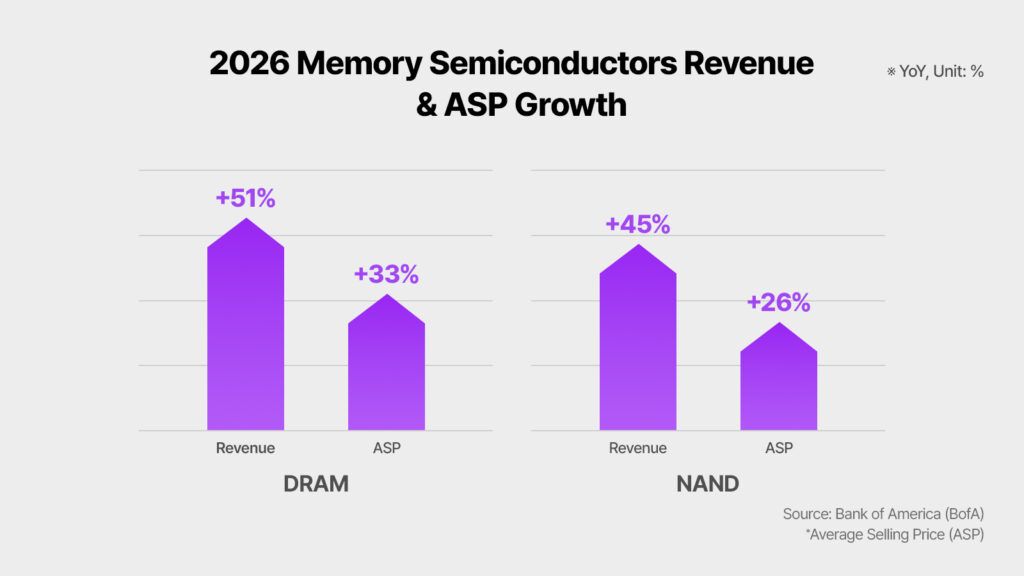
- The root cause is a zero-sum reallocation of global silicon wafer capacity: every wafer Samsung, SK Hynix, and Micron redirect toward high-bandwidth memory for AI accelerators is a wafer removed from the NAND and consumer DRAM pipeline, and IDC forecasts 2026 NAND supply growth at just 17%, well below the historical norm of 20-30%.
- S&P Global Ratings, Morgan Stanley, and JPMorgan have all issued warnings that this scarcity will persist well beyond 2026, with S&P forecasting elevated memory prices through at least 2028 and JPMorgan estimating that DRAM and NAND could climb from roughly 10-15% of iPhone component costs today to more than 45% by 2027.
- SanDisk reported Q3 FY2026 revenue of $5.95 billion, up 251% year-over-year, with non-GAAP EPS of $23.41 against analyst estimates of approximately $14, a 60% beat, reflecting the pricing power generated by its pure-play NAND position, fully booked 2026 capacity, and $42 billion in secured long-term agreements.
- Bernstein raised its SNDK price target to $3,000 with an Outperform rating, citing SanDisk's LTA contract advantage over Micron as evidence that the company has structurally insulated a portion of its earnings from spot-price volatility.
- The word "monopoly" in this context requires precision: SanDisk does not literally control 100% of the NAND market. But as the only major US-listed, pure-play NAND supplier, freed from the conglomerate discount of a combined HDD business and backed by the most complete set of AI-oriented long-term supply agreements among Western NAND makers, it occupies a market position that no direct US-listed peer currently mirrors.
The "AI Memory Supercycle" has been described as everything from the most powerful structural trade of 2026 to an overextended bubble propped up by narrative momentum. The debate intensified sharply during the last week of June 2026 when Apple, a company that has famously absorbed component cost swings rather than pass them to consumers for most of the past decade, announced immediate price hikes across its Mac, iPad, and accessory lineup, citing memory and storage costs it called "unavoidable" and "unsustainable." This wasn't a small adjustment; the Mac Studio M3 Ultra alone rose $1,300. At exactly the same moment, Bernstein analyst Mark Newman raised his price target on SanDisk to $3,000, the highest on Wall Street among major firms, citing the company's long-term agreement structure as a hidden competitive advantage over Micron. The collision of these two data points, Apple's forced admission that it cannot outrun NAND costs, and Wall Street's most bullish institutional target on the sector's purest play, crystallized what the AI memory supercycle debate is actually about: not whether demand is real, but whether pricing power will last long enough to justify valuations, and whether SanDisk is uniquely positioned to benefit even if it does.
If you want to position yourself to act on AI memory sector moves quickly as this debate resolves, you can create a free account through WEEX and start monitoring SNDK alongside the broader semiconductor landscape in real time.
SNDK USDT is now available on WEEX.
The Zero-Sum Wafer Game: Why Big Tech's Pain Is SanDisk's Gain
Understanding the AI memory supercycle requires understanding a single physical constraint: semiconductor fabrication clean rooms have a fixed capacity, and every wafer dedicated to one product is a wafer unavailable for another. Since 2023, hyperscalers including Microsoft, Google, Meta, and Amazon have collectively committed hundreds of billions of dollars to AI data center buildout, creating relentless demand for high-bandwidth memory used in NVIDIA and AMD AI accelerators. Samsung, SK Hynix, and Micron, the world's three largest memory manufacturers controlling roughly 90-95% of DRAM production, have responded by pivoting their limited clean room space and capital expenditure toward higher-margin enterprise-grade components.
This is a zero-sum game. Every wafer that becomes an HBM stack for an AI accelerator is a wafer that does not become a stick of desktop RAM or a NAND flash module for a smartphone or SSD. By early 2026, HBM alone was consuming approximately 23% of global DRAM wafer capacity, a share that would have been near zero three years earlier. The simultaneous pivot by some manufacturers toward converting NAND production lines to DRAM, to capture even higher margins in AI-driven markets, has created a cascading scarcity that stretches from server storage to consumer laptops.
The most visible and financially significant consequence of this cascade is that it has removed the ability of even the most powerful consumer electronics buyers to negotiate component costs down to manageable levels.
| Company | Pricing Action | Date | Memory Component Driver |
|---|---|---|---|
| Apple | Mac/iPad up to $300 price hike | June 25, 2026 | NAND up 90%+ QoQ; DRAM up 90-95% Q1 2026 |
| Apple | iPhone 18 Pro expected ~$200 hike | September 2026 (est.) | 256GB NAND: $13 → ~$51 per unit |
| Microsoft | Surface Pro 13-inch: $999 → $1,499 (~50%) | June 2026 | DRAM shortfall from AI wafer reallocation |
| Microsoft | Xbox console price increases | June 2026 | Memory chip squeeze spreading to gaming |
| AWS | Cloud service pricing up ~20% | 2026 | Scarcity costs passed to enterprise customers |
| Dell | Warned of "never witnessed" cost escalation | Nov 2025 | DRAM, HDD, NAND tightening across server line |
Tim Cook described the memory shortage in a Wall Street Journal interview as a "hundred-year flood," something he had never witnessed in more than 40 years in the industry. That statement from the leader of a company with arguably the most sophisticated supply chain management operation on earth is not the language of a cyclical wobble. It is the language of structural disruption.
Why SanDisk's Position Is Different From Other Memory Plays
SanDisk is frequently described in analyst notes as the "pure-play" NAND option, and it's worth explaining precisely what that means in practical terms, since it changes how the company experiences the current supercycle compared to more diversified peers.
When SanDisk completed its spin-off from Western Digital in February 2025, it was separated from the HDD business that had historically dragged on NAND's valuation multiple through what analysts call a conglomerate discount. Freed from the income statement structure of the HDD business, the market was able to value SanDisk based on a pure-play NAND supplier pricing model. This re-rating alone explains a portion of the stock's extreme performance.
But the more operationally significant distinction is the LTA structure. The company has secured five multi-year AI-focused supply agreements worth approximately $42 billion in total commitments. New manufacturing facilities from Micron and SK Hynix are not expected to reach volume production until 2027 at the earliest, meaning SanDisk's contracted customers are locking in supply at elevated prices across a window when the company's entire 2026 production capacity is already sold out.
| Memory Supplier | NAND Pure-Play | Key AI Differentiator | LTA Contract Visibility | US-Listed |
|---|---|---|---|---|
| SanDisk (SNDK) | Yes | Pure NAND, $42B LTA backlog, HBF pipeline | Highest disclosed | Yes |
| Micron (MU) | No (DRAM + NAND + HBM) | HBM growth, diversified | Moderate | Yes |
| Samsung | No (DRAM + NAND + HBM + consumer) | HBM4 development, scale | Limited (not US-listed) | No |
| SK Hynix | No (HBM dominant) | HBM market leader (58% share) | Limited (not US-listed) | No |
| Kioxia | Yes (NAND-focused) | SanDisk JV partner | Not US-listed | No |
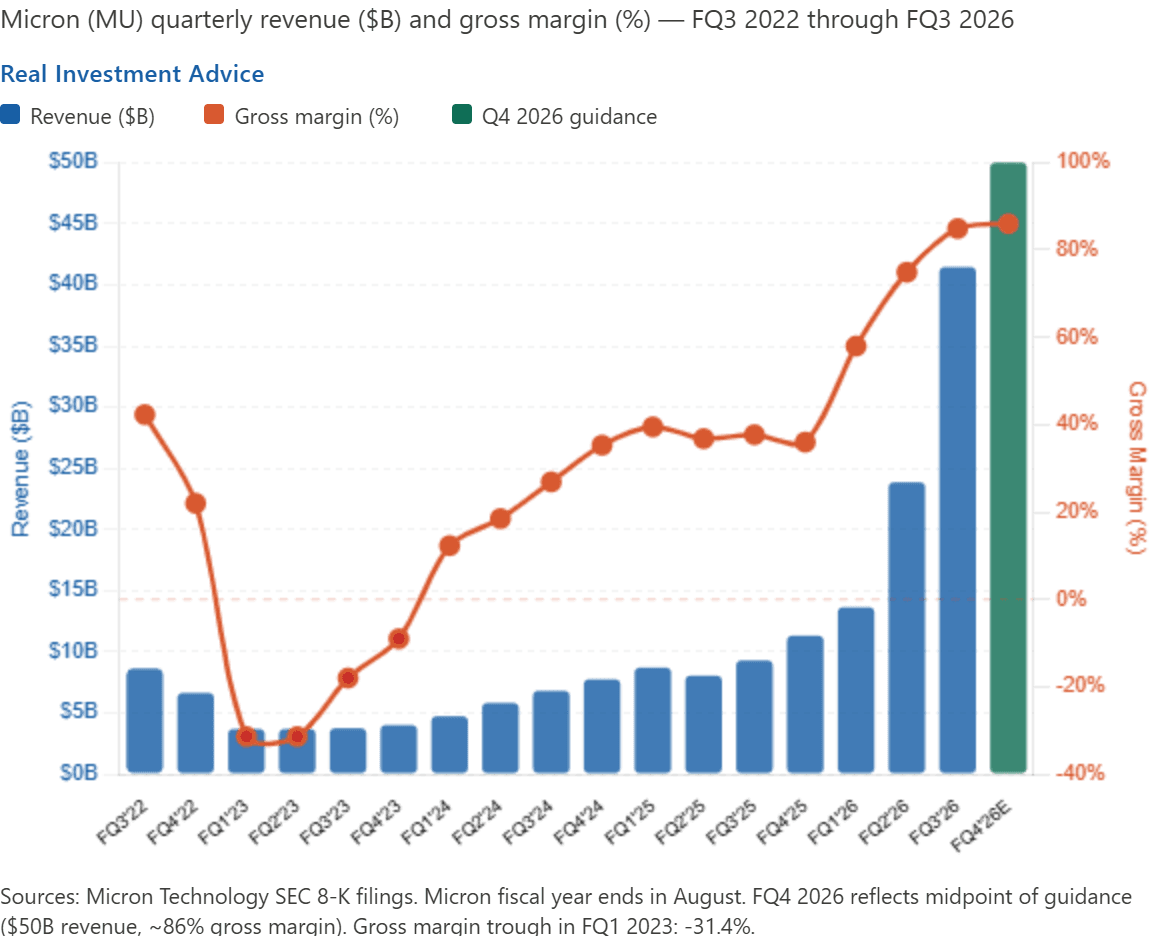
Bernstein's argument for the $3,000 target centers on this LTA advantage over Micron. Both companies are beneficiaries of NAND pricing strength, but Micron's more diversified structure means it also carries exposure to DRAM and HBM competitive dynamics, while SanDisk's full concentration on NAND, combined with its contracted revenue pipeline, makes its near-term earnings trajectory more predictable and arguably less subject to the spot-price volatility that characterizes the memory industry's historical boom-bust pattern.
Big Tech's Margin Panic: What the Earnings Call Transcripts Reveal
The degree to which NAND and DRAM cost inflation has become a central concern in 2026 earnings conversations is remarkable. Multiple major technology companies have moved from generic "supply chain awareness" language in 2025 to explicit, detailed warnings about memory cost trajectories in 2026.
Dell Technologies COO Jeff Clarke stated during a late 2025 analyst call that the company had "never witnessed costs escalating at the current pace," describing tighter availability across DRAM, hard drives, and NAND flash memory. A hardware executive from a major PC manufacturer, in a February 2026 analyst call, described "increased input costs driven primarily by the rising prices of DRAM and NAND" and warned that "this volatility is likely to remain throughout fiscal '26 and into fiscal '27." Gartner projected that rising memory prices would make low-margin entry-level laptops under $500 financially unviable within two years. One industry analyst, assessing the magnitude of the shift, described it as "the most significant disconnect between demand and supply in terms of magnitude as well as time horizon" in 25 years of industry experience.
Morgan Stanley noted that memory prices have climbed sixfold over the past year, with new manufacturing capacity likely to take years to build and ramp. JPMorgan analysts estimate DRAM and NAND could jump from roughly 10-15% of an iPhone's total component cost today to more than 45% by 2027. Research firm TechInsights, tracking individual components, estimates the 12GB DRAM package in an iPhone Pro has risen from approximately $39 to a projected $145, a 272% increase for the same quantity of the same chip type. Every one of these disclosures, coming from companies that are motivated to minimize public alarm about their own cost pressures, functions as an involuntary validation of SanDisk's pricing power.
| Analyst/Agency | Memory Price Forecast | Duration | Key Metric |
|---|---|---|---|
| S&P Global Ratings | Elevated through 2028 | Multi-year | AI data center capex persists |
| Morgan Stanley | Sixfold increase in past year | Ongoing | New capacity years away |
| TrendForce | NAND +90% QoQ (early 2026); further +40-50% Q3 | 2026 | Pricing power confirmed |
| IDC | NAND supply growth 17% vs 20-30% historical | Full year 2026 | Below-norm supply growth |
| JPMorgan | DRAM/NAND from 10-15% to 45% of iPhone BOM by 2027 | Into 2027 | Consumer device inflation |
| McKinsey | $7T data center spending through 2030 | Multi-decade | $5.2T AI-focused |
SanDisk's Financial Performance: Reading the Numbers Behind the Stock
Against this backdrop, SanDisk's most recent quarterly results show a company that is operating almost ideally within the supercycle conditions described above. Fiscal Q3 2026 revenue came in at $5.95 billion, up 251% year-over-year and 97% sequentially, surpassing the company's own guidance range and decisively beating Wall Street estimates. Non-GAAP diluted EPS came in at $23.41, representing a massive beat against analyst expectations of approximately $14, with a positive EPS surprise of nearly 60%. Gross margin expanded by 55.7 percentage points year over year, directly driven by the pricing power generated by the NAND supply shortage. The company's data center segment surged 233% sequentially, and the company ended the quarter completely debt-free, with a $6 billion share repurchase program authorized.
At the Mizuho 2026 Technology Conference, SanDisk highlighted the pace of its revenue trajectory: fiscal 2025 revenue at approximately $7 billion, fiscal 2026 revenue discussed at approximately $20 billion, and Street consensus for fiscal 2027 near $45 billion. This six-fold revenue expansion in roughly three fiscal years, occurring alongside gross margin expansion rather than compression, is the financial architecture that makes even aggressive analyst price targets defensible in forward-earnings terms.
| Metric | Q3 FY2026 Actual | Year-Over-Year Change | Analyst Beat |
|---|---|---|---|
| Revenue | $5.95 billion | +251% | Above guidance |
| Non-GAAP EPS | $23.41 | From -$0.30 loss | ~60% beat vs $14 est. |
| Gross Margin (GAAP) | +55.7pp YoY expansion | Multi-decade highs | Above estimates |
| Data Center Revenue | Surged 233% sequentially | Explosive | Above estimates |
| Net Debt | Zero (debt-free) | Structural improvement | Positive signal |
| LTA Backlog | ~$42 billion | New contracts added | 5 multi-year AI agreements |
The Supercycle vs. Bubble Debate: Two Legitimate Views
The "supercycle debate" framing in this article's title is not just rhetorical. There is a genuine, well-argued disagreement among analysts about whether the current NAND pricing environment represents a durable structural shift or an overextended cyclical peak that will correct sharply when new supply arrives.
The bull case rests on the permanence of AI infrastructure demand, the multi-year timeline for new fabrication capacity (Micron and SK Hynix facilities not reaching volume until 2027 at earliest), the LTA contract structure that locks in elevated pricing beyond spot fluctuations, McKinsey's $7 trillion data center spending forecast through 2030, and the demonstrated willingness of Big Tech buyers to sign contracts that insulate suppliers from spot volatility at the cost of volume commitment.
The bear case rests on the historical pattern of NAND cyclicality, where every upcycle has been followed by an overcorrection as manufacturers simultaneously expand capacity in response to high prices. The analysis from the 2026 global memory manufacturer ranking noted that Kioxia and SanDisk are enjoying premium pricing at the peak of the NAND upcycle but will also face the steepest declines when the cycle reverses. Morgan Stanley's historical modeling, based on the 2016-2018 cycle, predicts industry median gross margins could fall 60% from peak and EPS could come in below consensus by 11%, potentially triggering significant multiple contraction.
Both views are legitimate. The intellectually honest position is that the current AI-driven NAND cycle has structural features, the AI infrastructure buildout, the wafer reallocation dynamic, the long-term contract structure, that did not exist in previous cycles, while also carrying the same fundamental risks that have characterized memory chip investing for decades.
What "SanDisk's NAND Advantage" Actually Means and Its Limits
The headline framing of "NAND monopoly" requires careful qualification. SanDisk is not a monopoly in any regulatory sense. Samsung maintains the largest global NAND market share, and the global NAND market involves at least five significant manufacturers including Samsung, SK Hynix, Micron, Kioxia, and SanDisk itself. What SanDisk possesses is not monopoly power but market positioning advantages that are specific to the current moment: it is the only major US-listed, debt-free, pure-play NAND producer with a disclosed $42 billion LTA backlog, a roadmap technology in HBF that could expand its addressable market, a valuation re-rating freed from HDD conglomerate discount, and a revenue trajectory that the Street is projecting at $45 billion for FY2027.
These are real advantages that translate into real pricing power and earnings visibility. They are not permanent structural advantages that guarantee SanDisk will remain insulated from cyclical forces indefinitely. When new NAND fabrication capacity comes online globally in 2027 and 2028, when Samsung potentially recovers from its current market share disadvantage in AI-grade NAND, and when the supply-demand balance eventually normalizes, the pricing power currently reflected in SanDisk's 55-78% gross margins will face genuine pressure.
The key question for investors and traders is whether the duration and depth of the current cycle's contracted revenue stream is long enough and large enough to justify current valuations, and whether management executes its HBF roadmap on schedule to open the next chapter of margin expansion before the current NAND cycle peaks.
Final Thoughts
Big Tech's margin panic in 2026 has done something that no analyst note could accomplish alone: it has transformed the AI memory supercycle from a semiconductor industry narrative into a consumer-facing, headline-generating reality. When Apple calls memory cost inflation "unavoidable," when Microsoft raises its Surface Pro by 50%, when AWS passes scarcity costs directly to enterprise cloud customers, and when S&P Global Ratings formally forecasts these conditions persisting through 2028, the question of whether the supercycle is real has been conclusively answered by the companies with the most to lose from admitting it. What remains genuinely open is whether it lasts long enough to deliver the full $3,000 price targets implied by Bernstein's most bullish projections, and whether the cycle's eventual reversal arrives before or after SanDisk's HBF technology creates a new layer of structural pricing power. Those questions will likely be answered across the next 12-18 months of earnings reports, NAND contract pricing updates, and new manufacturing capacity ramp announcements. In the meantime, the fundamental debate has shifted from "is this real?" to "how long does it last?" and that is, by most analytical standards, a significantly stronger starting point for the bull case than where the argument was a year ago.
The AI memory supercycle is creating tradeable, high-impact moves across the semiconductor and storage sector. If you want to position yourself ahead of the next SNDK earnings catalyst, monitor NAND pricing updates as they flow through sector reports, or track the broader AI infrastructure trade in real time, sign up through WEEX and start turning your research into action today.
Frequently Asked Questions
1. What is the AI memory supercycle, and is it different from past memory cycles?
The AI memory supercycle refers to the current multi-year period of elevated NAND and DRAM pricing driven primarily by hyperscaler demand for AI data center storage and memory. What distinguishes it from previous cycles is that this shortage stems from a deliberate, structural reallocation of wafer capacity toward high-bandwidth memory for AI accelerators, rather than from demand overshooting supply temporarily. Long-term supply agreements between SanDisk and hyperscalers, totaling approximately $42 billion, also provide a contracted pricing floor that historically was not present in memory downturns.
2. Why does Apple raising its prices confirm SanDisk's pricing power specifically?
Apple is widely regarded as the most powerful supply chain negotiator in consumer electronics. When a company that has historically absorbed component cost swings rather than passing them to consumers announces that price hikes are "unavoidable," it confirms that the NAND pricing environment is beyond the reach of even the most resourceful buyer to negotiate down. For SanDisk, as a pure-play NAND supplier with fully sold-out 2026 capacity, this confirmation directly validates the supply constraint thesis behind its long-term agreement pricing structure.
3. What is the difference between SanDisk and Micron as AI memory investments?
SanDisk is a pure-play NAND flash company with no DRAM, HBM, or HDD exposure, while Micron is diversified across DRAM, NAND, and high-bandwidth memory. SanDisk's concentration means greater earnings sensitivity to NAND pricing swings in both directions, while Micron's diversification provides more buffer across different memory product cycles. Bernstein specifically cited SanDisk's LTA structure as giving it a contract-pricing advantage over Micron in the current environment.
4. How long will the NAND price supercycle last?
Multiple independent forecasts project the shortage extending well beyond 2026. S&P Global Ratings forecasts elevated memory prices through at least 2028, citing continued AI data center investment from Microsoft, Google, Amazon, and Meta. New fabrication capacity from Micron and SK Hynix is not expected to reach volume production until 2027 at the earliest, and McKinsey projects $7 trillion in data center spending through 2030, with $5.2 trillion AI-focused, meaning demand-side pressure is unlikely to abate quickly.
5. What are the risks of investing in SanDisk based on the AI memory supercycle thesis?
The primary risks include the historical cyclicality of the memory chip industry, which has historically seen sharp oversupply corrections after every pricing peak; a stretched valuation at 64-71x earnings versus an industry average of roughly 44x; manufacturing dependency on the Kioxia joint venture; potential faster-than-expected competitive capacity additions from Samsung and SK Hynix; a consumer segment already showing 10% sequential revenue decline; and the possibility that AI capital expenditure slows faster than current hyperscaler guidance implies, reducing the structural demand underpinning the LTA contract values.
Disclaimer
This article is for informational and educational purposes only and does not constitute financial, investment, legal, or tax advice. All data, price targets, earnings figures, and industry forecasts referenced in this article reflect publicly available information as of late June through early July 2026 and are subject to change without notice. SanDisk (SNDK) has exhibited extreme price volatility and past performance is not indicative of future results. Analyst price targets, including Bernstein's $3,000 target, represent third-party opinions and are not guarantees of future stock price performance. All investment decisions carry risk of partial or total loss. Always conduct independent research and consult a licensed financial professional before making any investment decision. Neither the author nor the publisher accepts liability for losses resulting from reliance on this content.
Disclaimer: This content is provided for general branding and informational purposes only and doesn't constitute financial, investment, legal, or tax advice. Any events, rewards, online events, or related information mentioned herein should not be considered a recommendation, solicitation, or invitation to purchase, sell, trade, or otherwise deal in any crypto assets or to use any services. Crypto assets are highly volatile and may result in loss. WEEX services and online events may not be available in all regions and are subject to applicable laws, regulations, and eligibility requirements. You are responsible for ensuring that your use of WEEX services complies with local laws and for carefully assessing the risks before participating in any crypto-related activities.
You may also like
France vs Morocco Prediction Crypto Odds
France vs Morocco Prediction Crypto Odds explained. Learn how Polymarket market data, blockchain prediction markets, liquidity, and crypto odds work during FIFA 2026.

Why Does SpaceX Own 18,712 Bitcoin? Here's What SPCX's Nasdaq 100 Entry Means for Crypto
SpaceX owns 18,712 Bitcoin worth $1.2B+. SPCX joined Nasdaq 100 on July 7 triggering $4.3B in passive buying. What it means for crypto and BTC price in 2026.
What Is Aptos (APT) Crypto and How Does It Work? The 2026 Complete Guide
What is Aptos (APT) crypto? Learn how it works, Block-STM tech, tokenomics, April 2026 reforms, current price, ecosystem, and whether APT is a good investment in 2026.

Where and How to Buy MSTR Futures: A Complete Trading Guide
Learn where and how to buy MSTR Futures, explore traditional stock access methods, and discover USDT-based MSTR price exposure through WEEX TradFi trading. Join the TradFi Trading Challenge for potential rewards.
Norway vs England Prediction: Can Haaland Shock England?
Explore Norway vs England prediction, Polymarket crypto odds, Haaland impact, team analysis, and key factors shaping this World Cup clash.

Is Election Prediction Market Betting Legal in the US? The Complete 2026 Guide
Is election prediction market betting legal in the US? Get the full 2026 breakdown of Kalshi vs Polymarket legality, insider trading risks, state bans, and scam warnings. (160 characters)
Prediction Market Regulations: What WEEX Users Should Know Before Trading Event Contracts
Prediction market regulations vary by country, state, event type, and platform structure. This WEEX-style education guide explains the main regulatory issues around event contracts, election markets, sports outcomes, crypto prediction markets, and user risk checks without treating prediction markets as a WEEX trading product.
How to Make Money on Prediction Markets: Strategies, Risks, and What WEEX Users Should Know
Prediction markets can create profit opportunities when traders price future events better than the crowd, but they also carry liquidity, legal, settlement, and behavioral risks. This WEEX-style education guide explains how prediction market profits work, why they are not guaranteed, and how crypto users can treat prediction markets as an external research theme rather than a WEEX trading product.
How to Buy WXT Token: A Beginner’s Guide to WEEX Token Trading
WXT is the native platform token of the WEEX ecosystem. This beginner-friendly guide explains how to buy WXT on WEEX, what to check before trading, how to manage risk, and how users can review WXT’s role within the exchange ecosystem before placing an order.
Is WXT Token a Good Investment? Benefits, Risks, and Key Factors to Watch
WXT may interest users who want exposure to the WEEX ecosystem, but it is still a volatile crypto asset with platform, liquidity, and market-cycle risks. This WEEX-style guide explains how beginners can evaluate WXT’s potential benefits and risks before making any trading decision.

Polymarket vs. Polls: What Prediction Markets Say About the 2026 Midterm Races
Polymarket-style prediction markets and traditional polls measure different things. This WEEX-style market review explains how users can compare election odds, polling data, liquidity, and political risk signals around the 2026 U.S. midterm races without treating prediction markets as a WEEX trading product.
Is Election Prediction Market Legal? State Bans vs. CFTC Lawsuits Explained
Election prediction markets sit between federal derivatives law, state gambling rules, and crypto-native event trading. This WEEX-style guide explains why legality depends on platform structure, jurisdiction, CFTC oversight, and state enforcement, while reminding users to treat election markets as an external regulatory topic rather than a WEEX trading product.
SNDK Stock Dip After Apple's Price Shock: Trap or Last Chance Before $3,000?
SNDK stock dipped 12%+ after Apple's price hike shock — but Bernstein just raised its target to $3,000. Is the SanDisk dip a trap or a buying opportunity? Full analysis with latest data, analyst targets, and risks.
United States Water Reserve (USWR): Can You Buy It Now? Price Outlook and Risk Guide
United States Water Reserve (USWR) has attracted attention because of its water-reserve narrative, but users should first confirm whether the token is actually tradable before looking for a buy route. This guide explains how WEEX users can track USWR, avoid fake links, and evaluate its price outlook with caution.
Is America 250 Coin a Cryptocurrency? Official Commemorative Coin vs Meme Token Explained
America 250 Coin can refer to official U.S. commemorative coinage or unofficial crypto tokens using similar patriotic branding. This guide explains the difference between physical commemorative coins and speculative meme tokens, and what WEEX users should verify before trading any America 250-themed crypto asset.

Gold Crash or Buying Opportunity? What the Market Is Really Telling Us
Gold crash or buying opportunity? Learn why gold prices fell, how Fed policy and crowded trades affect the market, and how PAXG and XAUT fit into tokenized gold trading.
WXT Token Trading Risks: Liquidity, Platform Dependence, and Price Volatility Explained
WXT is connected to the WEEX ecosystem, but traders still need to understand liquidity, platform dependence, volatility, market cycles, and execution risk before entering a position. This guide explains how WEEX users can evaluate WXT with a practical risk framework.

Why Are Prediction Markets Booming? Polymarket, Kalshi, and the On-Chain Trading Narrative
Prediction markets are gaining attention because they turn real-world uncertainty into tradable probabilities. This WEEX-style market review explains why Polymarket, Kalshi, stablecoins, social media, and on-chain trading narratives are pulling more traders toward event-based markets.
Are Prediction Markets Investing or Gambling? Key Regulatory Risks Before Trading
Prediction markets sit between finance, forecasting, speculation, and gambling. This WEEX Wiki article explains why the regulatory line is blurry, what beginners should check before trading event contracts, and why users should treat prediction market odds as external research rather than a WEEX trading product.

QCOM Stock Forecast 2026: Will Qualcomm's AI Push Revalue the Stock?
QCOM stock forecast 2026: Explore Qualcomm’s AI data center push, AI phones, growth drivers, risks, and USDT-based TradFi trading on WEEX.
SpaceX Starlink Launch Vandenberg June 2026: Southern California Visibility Guide
SpaceX Starlink launch Vandenberg June 2026 visibility guide for Southern California with today’s liftoff time, best viewing areas, weather-based outlook, and live update details.
SpaceX Starlink Launch Vandenberg: Live Updates and Liftoff Time for Today
SpaceX Starlink launch Vandenberg live updates and liftoff time for today’s launch. Get the latest timing, Starlink 17-28 details, 24-satellite payload info, and current countdown updates.
Why SpaceX and OpenAI IPOs Are Draining Bitcoin Liquidity
Why SpaceX and OpenAI IPOs are draining Bitcoin liquidity in 2026, including IPO flow impact, BTC ETF outflows, AI stock rotation, and market implications.
Is SpaceX IPO a Good Investment? SpaceX Stock, Valuation, Risks & Future Growth Explained
Is SpaceX IPO a good investment? Explore SpaceX stock valuation, Starlink growth, IPO risks, future potential, and whether buying SpaceX shares makes sense in 2026.
What Is Project Oasis Coin (PXR) Crypto? Latest 2026 Guide to PXR Price, Solana Contract And More
What is Project Oasis Coin (PXR) crypto? Read the latest 2026 guide to PXR price, Solana contract, market cap, legitimacy, risks, and how to trade safely.
Rardden Token AI Transaction Framework: Why It Matters in 2026
Why Rardden Token is introducing a new AI transaction framework, what RDN claims to solve, latest project update, risks, contract details, and AI crypto insights.
USWR Price Prediction: Can United States Water Reserve Hit $1?
Can United States Water Reserve hit $1 in 2026? USWR has started attracting attention because it combines several powerful crypto narratives: Solana tokens, AI infrastructure, water demand, real-world asset language, and scarcity around natural resources. That mix can create strong market interest, but it also makes careful research more important.
Can CDOF Reach $1 in 2026? Chinese Digital Oil Fund Price Prediction
Can CDOF reach $1 in 2026? That question has started appearing because Chinese Digital Oil Fund, or CDOF, has gained attention as a Solana-based token with an energy-themed narrative. The name sounds serious, but traders should separate the branding from the actual market structure before making any price prediction.
Can XRP Reach $10 in 2026? XRP Price Prediction and Market Cap Analysis
Can XRP reach $10 in 2026? It is one of the most searched questions around large-cap crypto assets because XRP has a long market history, deep liquidity, and one of the strongest brand names in digital assets. But a $10 target is not just about popularity. It depends on supply, valuation, market demand, XRP Ledger adoption, and whether the broader crypto market can support another major altcoin expansion.
Futu Penalty Shock Exposes Brokerage Risk — Why WEEX TradFi Fits Traders Who Want Faster Global Market Access
Futu stock falls after China penalty news. Learn why FUTU shares dropped, how the latest crackdown affects traders, and why WEEX TradFi offers USDT-margined access to stocks, gold, oil, forex, and indices in one account.
France vs Morocco Prediction Crypto Odds
France vs Morocco Prediction Crypto Odds explained. Learn how Polymarket market data, blockchain prediction markets, liquidity, and crypto odds work during FIFA 2026.
Why Does SpaceX Own 18,712 Bitcoin? Here's What SPCX's Nasdaq 100 Entry Means for Crypto
SpaceX owns 18,712 Bitcoin worth $1.2B+. SPCX joined Nasdaq 100 on July 7 triggering $4.3B in passive buying. What it means for crypto and BTC price in 2026.
What Is Aptos (APT) Crypto and How Does It Work? The 2026 Complete Guide
What is Aptos (APT) crypto? Learn how it works, Block-STM tech, tokenomics, April 2026 reforms, current price, ecosystem, and whether APT is a good investment in 2026.
Where and How to Buy MSTR Futures: A Complete Trading Guide
Learn where and how to buy MSTR Futures, explore traditional stock access methods, and discover USDT-based MSTR price exposure through WEEX TradFi trading. Join the TradFi Trading Challenge for potential rewards.
Norway vs England Prediction: Can Haaland Shock England?
Explore Norway vs England prediction, Polymarket crypto odds, Haaland impact, team analysis, and key factors shaping this World Cup clash.
Is Election Prediction Market Betting Legal in the US? The Complete 2026 Guide
Is election prediction market betting legal in the US? Get the full 2026 breakdown of Kalshi vs Polymarket legality, insider trading risks, state bans, and scam warnings. (160 characters)

Contents
Latest articles




Latest coin listings on WEEX


