This Bitcoin Developer's Plan Could Make Quantum Hackers Lose Money While Trying to Steal Coins

 Prefer us on Google


To steal coins, hackers must first stake their own Bitcoin, or risk losing their collateral.
Written by: Jose
Compiled by: Chopper, Foresight News
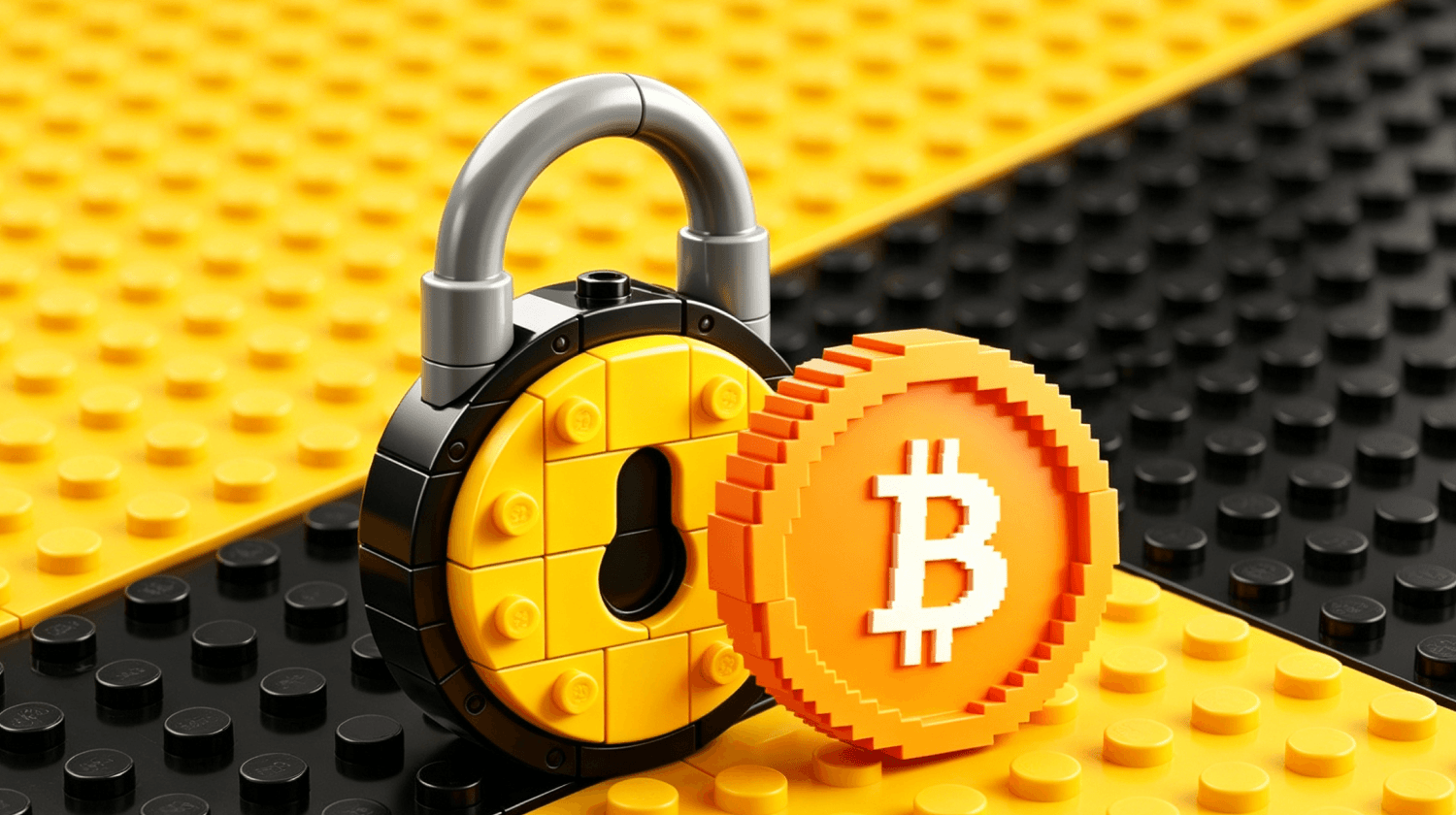
Bitcoin developer Cory Fields has come up with a unique way to combat future quantum hackers: hackers who want to steal someone else's Bitcoin must first stake their own Bitcoin as a gamble.
He posted in the Bitcoin developer mailing list proposing the concept of "quantum landmines" and two auction mechanisms. The idea behind this design is to make attacking wallets with vulnerabilities a potentially money-losing endeavor. He specifically noted that this is just a thought experiment and not a finalized Bitcoin upgrade proposal.
Bitcoin users initiate transactions by signing with their private keys, while the corresponding public keys allow the network to verify the signatures without revealing the private keys. Currently, ordinary computers cannot feasibly derive private keys from public keys. However, a sufficiently powerful quantum computer could use Shor's algorithm to calculate the private key, allowing hackers to directly transfer the coins.
Some early Bitcoin addresses have their public keys exposed on the blockchain; others expose their public keys when users make their first transactions. Therefore, not all wallets face the same risk of quantum attacks. The day when "quantum computers capable of breaking Bitcoin encryption" are realized is referred to as Q-Day (Quantum Doomsday). No machine has achieved this yet, and no one knows when it will happen.
How Do Quantum Landmines Work?
Suppose you have 1 BTC in your wallet, which is of an old type that is vulnerable to quantum attacks. Before Q-Day arrives, you create a small, quantum-resistant Bitcoin output, hiding a proof that demonstrates this coin was yours before quantum attacks became feasible. You can think of it as a sealed "ownership certificate." Outsiders can only see this small record and cannot access the hidden evidence, nor do they know it is a trap.
In the future, when a hacker uses a quantum computer to calculate your old private key and attempts to transfer your 1 BTC, according to this new rule, they cannot simply take the coin; they must stake 1 BTC from their own quantum-resistant wallet as collateral.
Your 1 BTC plus the hacker's 1 BTC collateral will be bundled together and locked in for a waiting period, say 30 days. During this time, the hacker cannot freely transfer the coins. If you discover someone attempting to steal your coins, you can present the hidden ownership proof. The Bitcoin network will determine that you can transfer both coins to your pre-prepared quantum-resistant address—your original coin plus the hacker's collateral.
The hacker has no way of knowing which old wallet contains such a trap. Even if they successfully calculate the private key, they could end up losing 1 BTC. However, this plan also has a cost: if the coin's owner wants to transfer their old coin normally after Q-Day, they must also present equivalent collateral. If they do not have extra BTC, this rule designed to protect against hackers could make it difficult for them to transfer their own coins.
What About Bitcoin That Has Lost Its Private Key and Is Unattended?
Quantum landmines have a prerequisite: the coin's owner must set up the trap in advance and present evidence during the appeal window. If the private key has been lost and the owner can no longer go online, this plan cannot protect those coins, including many early Bitcoins that are widely believed to be permanently lost.
To address this, Cory Fields proposed a second mechanism: staking auctions. Before Q-Day, anyone can lock a portion of quantum-resistant Bitcoin and quietly bid on an old wallet that is likely to be targeted. For example, if a wallet that appears to have been abandoned by its owner contains 50 BTC, a hacker attempting to transfer it would need to stake 50 BTC as collateral. During the auction window, those who placed bids earlier can challenge the theft attempt. According to his vision, successful challengers can take a portion of the hacker's collateral, while the 50 risky Bitcoins will be destroyed and not awarded to the challengers. The goal is not to help the missing owner recover their coins, but to prevent hackers from easily stealing the coins, thereby discouraging attacks.
The third proposal is called a smart auction, which does not require locking coins in advance. Whenever someone attempts to transfer high-risk coins, an auction will automatically begin. The highest bidder will receive these coins (after deducting their own bid), while the second-highest bidder will lose their money without receiving anything. This is somewhat similar to the classic "dollar auction game": two people continuously raise the price for an item, and neither wants to lose money for nothing. Hackers will weigh the risks and may choose not to initiate this auction, which is likely to result in greater losses.
Why Not Simply Freeze High-Risk Bitcoins?
One proposed countermeasure is to set a migration deadline, after which coins in old wallets would be prohibited from being transferred. While this would indeed prevent theft, the downside is that genuine holders who forget to transfer their coins or do not have time to act would have their coins permanently locked.
Cory Fields has taken a different approach. Old coins can still be transferred, but any attempt to transfer them incurs costs and invites challenges from others. The Bitcoin network itself cannot distinguish whether the person presenting a valid signature is the true owner or a quantum hacker. The trade-offs are quite clear: legitimate holders must prepare significant collateral to transfer coins; long-term offline holders may miss the opportunity to appeal; and even some holders who are alive but temporarily offline may have their coins destroyed in the auction.
-- Price
What Changes Are Needed for Implementation?
Bitcoin first needs a quantum-safe way to hold and use funds. Wallets must support hidden ownership commitments, and Bitcoin's consensus rules must enforce collateral, waiting periods, special recovery transactions, and auction mechanisms.
Developers also need to reach consensus on when the new rules will take effect, the required collateral amounts, and how to handle failed bids or remaining funds. Fields believes that some mechanisms can be introduced through soft forks, but he has not provided detailed design proposals.
Currently, none of these protective mechanisms exist on the Bitcoin network. Fields has not provided code implementations, timelines for deployment, or finalized funding allocations and ultimate goals for the auctions in the original text.
This content is provided for general informational purposes only and doesn't constitute financial, investment, legal, or tax advice. Any events, rewards, online promotions, or related information mentioned herein should not be considered a recommendation, solicitation, or invitation to purchase, sell, trade, or otherwise deal in any crypto assets. Crypto assets are highly volatile and may result in loss. The availability of WEEX services, products, and related events may vary by region. You are responsible for ensuring that your participation is in accordance with applicable local laws and regulations.
You may also like

Tax-Savvy Ways to Support Charities and Family

Should You Buy Nvidia Stock Before CEO Jensen Huang Testifies in Front of Congress on Dec. 1 and Dec. 3?

RTX Unit Pratt & Whitney Wins $2.5 Billion Navy Contract

Anthropic Gets a Blockbuster IPO; Take-Two Gets a Blockbuster GTA VI Release

Black Friday Stock Deals: 7 Bargains Our Analysts Are Watching Now
OpenAI Sues Apple for Theft of Trade Secrets

EU's $1.7 Trillion Long-Term Budget Negotiations Collapse, Heightening Year-End Pressure Amid Growing Divisions Among 27 Countries

Top LEO Satellite Stocks to Watch in 2026
Digital wallets gain traction while AI still raises concerns

Revolution and Its Betrayal: Why People Remember SBF

Zhao Changpeng at BNB Demo Night in Bangkok: Bitcoin at $60,000 is a Good Price! Cryptocurrency Will Not Disappear
UnitedHealth Keeps Raising Guidance. Here's What a $10,000 Investment Could Be Worth If the Turnaround Sticks.
RWA Enters the Era of 'Big Infrastructure': The Competition Just Begins After Asset Tokenization

3 Lessons From Berkshire Hathaway's Stock Portfolio That Work for Any Stock Portfolio

If You Put $10,000 in the Schwab U.S. Dividend Equity ETF 10 Years Ago, Here's What You'd Have Now

Anthropic’s Lock-Up Expirations Start Dec. 15. Here’s What Investors Should Know Before Then.

Does Bill Ackman Know Something Wall Street Doesn't? The Billionaire Investor Keeps Buying a Tech Stock That's Now Down 44% Over the Past Year.
1 No-Brainer Stock to Buy and Hold for 10 Years

Transforming Collectors' Real Treasures into Creative Starting Points: Top.Market Builds an Open Network for the Global Collectibles Community

Black Friday Approaches, Market Discounts First: No Escape for US Stocks and Crypto
From Bear Market Low to Renaissance: Yuxin Instant Pig Visits Huobi's Celebrity Lecture Hall to Interpret Ethereum's Breakthrough Path

Anthropic Tokenized Stock Holders Double in Three Days, Market Value Approximately $30 Million
From Visa Experiments to KYA Governance: Who Defines the Financial Boundaries of Agents?

Standard Chartered's Incoming CISO: Security Cannot Be an Afterthought in the Era of Digital Assets

Where Are the Boundaries of Crypto Security in the AI Era? Insights from Du Jun, SlowMist, CertiK, and BlockSec

Michael Burry Shares 'Must-Read' Article: Data Center Financing May Face 'Liquidation'

Crypto Scams: Washington Strikes Southeast Asian Networks
UK Cabinet Minister: Last Week's UK-EU Agreement is Just the Starting Point, Future Will Seek to Deepen Relations with the EU
Why Has the Hottest Robotics Sector Become a 'Startup Graveyard' Despite $100 Billion Investment?

Former Goldman Sachs FICC Executive Herman Jin: AI Is Not the Problem, Liquidity Is; Semiconductor Turning Point May Be in Q1 2027
Tax-Savvy Ways to Support Charities and Family
Should You Buy Nvidia Stock Before CEO Jensen Huang Testifies in Front of Congress on Dec. 1 and Dec. 3?
RTX Unit Pratt & Whitney Wins $2.5 Billion Navy Contract
Anthropic Gets a Blockbuster IPO; Take-Two Gets a Blockbuster GTA VI Release
Black Friday Stock Deals: 7 Bargains Our Analysts Are Watching Now
OpenAI Sues Apple for Theft of Trade Secrets
Latest articles



Latest coin listings on WEEX