
From Data Perspective on Crypto Company Changes: USDC Weekly Trading Volume Reaches $24 Billion

Original Article Title: How crypto data informs earnings
Original Article Author: The Kaiko Research Team
Original Article Translation: Deep Tide TechFlow
As the North American region rapidly resolves the tariff dispute, the global market is gradually stabilizing. At the same time, the United States is actively exploring the establishment of its own sovereign wealth fund, while cryptocurrency regulator David Sacks optimistically predicts that digital assets are about to enter a "golden age."
This week, we will delve into the following aspects:
· Coinbase's market performance ahead of its earnings report
· Significant growth in USDC trading volume on the Binance platform
· Trends in the altcoin market liquidity
How Crypto Data Has Become a Key Tool for Predicting Earnings
Coinbase Earnings Preview: Market Data Provides Early Insights
Coinbase will release its 2024 fourth-quarter earnings report this Thursday (February 13). Prior to this, by analyzing market data, we can gain preliminary insights into its performance. While analyst revenue expectations and outlook will have a direct impact on stock prices, cryptocurrency market data is often a crucial leading indicator of exchange health.
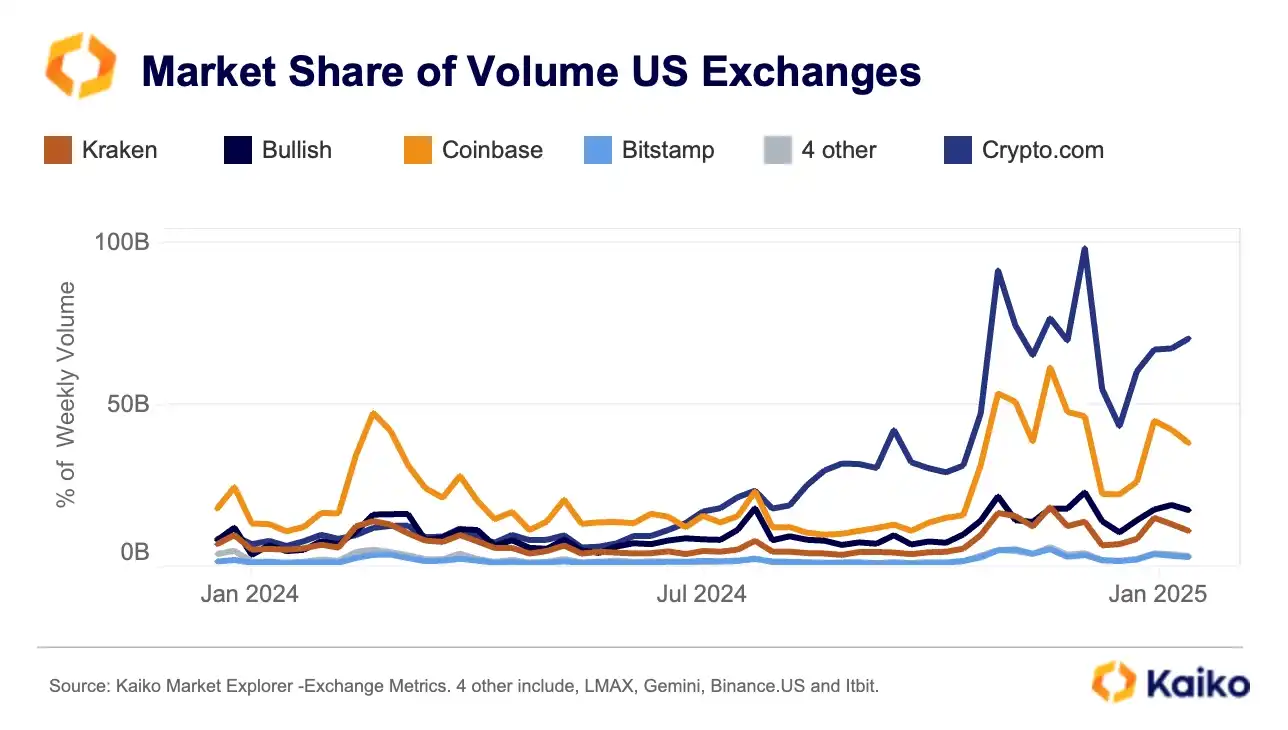
Data shows that Coinbase's weekly trading volume in the fourth quarter rose to the highest level in two years. This trend indicates that the platform benefited significantly from the market rebound after the U.S. election.
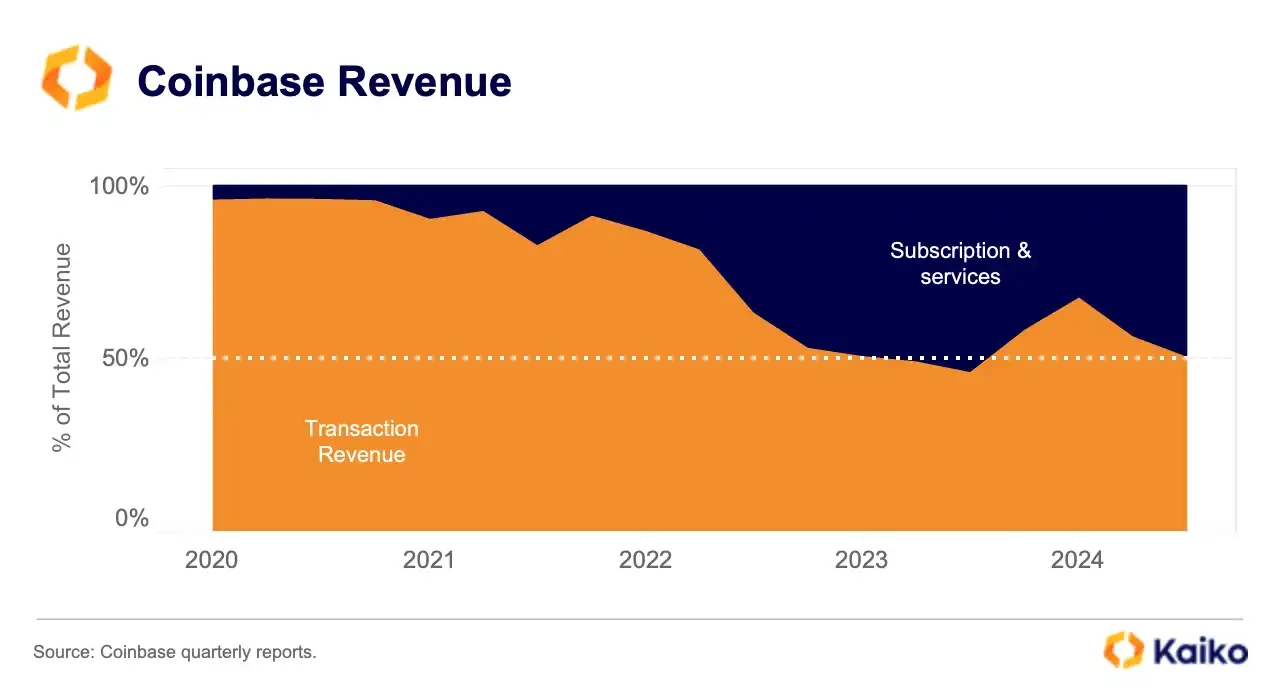
In recent years, Coinbase's revenue sources have become increasingly diversified, with its "Subscription and Services" business (including staking rewards, custody fees, and USDC interest) showing a significant increase in revenue share.
However, transaction revenue remains Coinbase's core business. Except for one quarter in 2023, transaction revenue has always accounted for over 50% of total revenue.
It is worth noting that subscription and service revenue is closely related to the overall activity of the cryptocurrency market and does not serve to diversify risk. Therefore, in case of low trading activity or market price decline, subscription and service revenue will also be significantly affected.
For example, in the third quarter of 2024, Coinbase's blockchain staking revenue decreased by 16% due to the price decline of ETH and SOL.
Through Kaiko's blockchain monitoring tool, it was found that the net flow on the Ethereum beacon chain decreased in the fourth quarter of 2024. As the second-largest ETH staking entity after Lido, Coinbase was one of the main contributors to this downward trend. Data shows that in the past six months, Coinbase's market share in the staking market has decreased by 3.8%, with a net outflow of 1.29 million ETH during the same period.

This trend indicates that although Coinbase still holds a significant position in the staking field, its market share is gradually being eroded by other competitors. This may have a detrimental impact on its long-term revenue growth and competitiveness.
Despite the price increase of ETH and SOL during the quarter partially mitigating the impact of staking reduction, the overall data still indicates that Coinbase's blockchain staking revenue may decline in the fourth quarter. In particular, in the ETH staking market, Coinbase's market share decreased by 3.8%, directly affecting its staking-related revenue.
Coinbase's business arrangement with Circle allows it to derive a stable revenue source from USDC-related income. It is worth noting that Circle's new partnership with Binance and record USDC trading volumes may to some extent counterbalance the decline in staking revenue. This provides Coinbase with additional revenue cushion, especially when staking and trading revenue face pressure.
Retail traders, as users paying the highest transaction fees, have seen their transaction volume share drop significantly from 40% in 2021 to the current 18%. While Coinbase's subscription services (such as blockchain staking and custody services) have seen growth, the exodus of retail traders still puts significant pressure on its trading revenue.
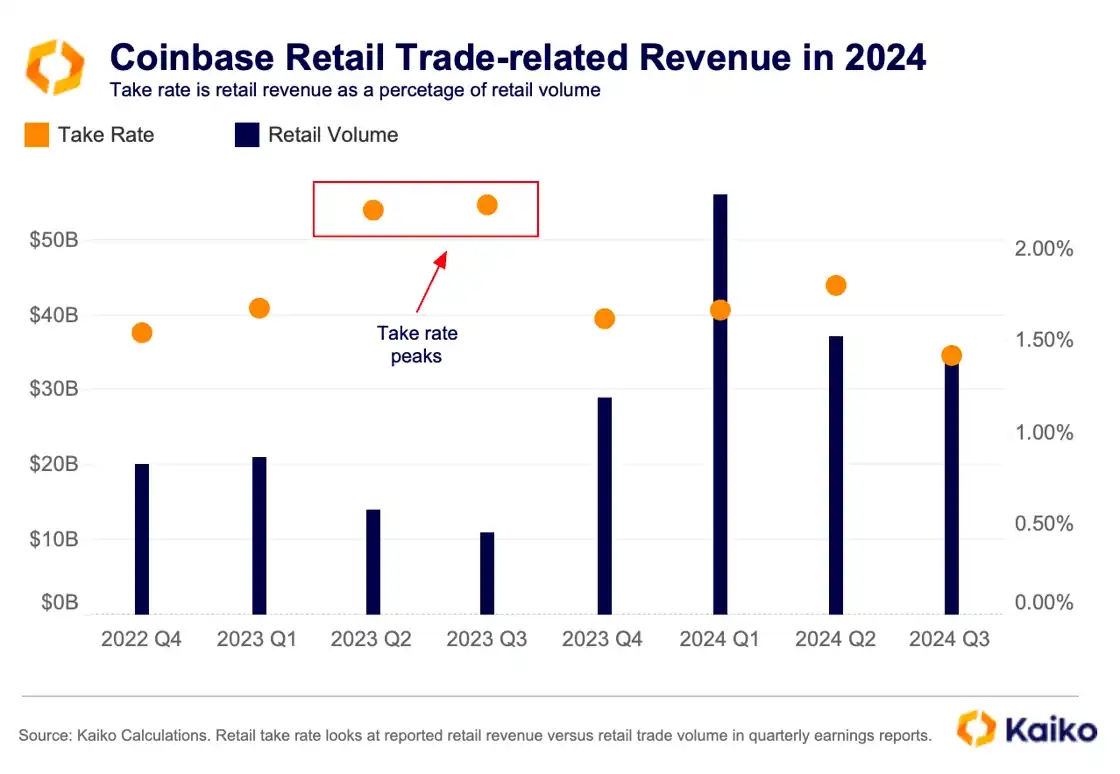
Since reaching its peak in mid-2023, Coinbase's "take rate" (i.e., the revenue share obtained from retail traders) has fallen to the lowest level since the Terra Luna crash in the first half of 2022.
The revenue decline comes at a time of intensified competition in the U.S. market, with some platforms attracting users by significantly reducing transaction fees, further exacerbating the pressure on platforms like Coinbase.
Although Coinbase remains one of the exchanges with the highest liquidity in the United States, its fee structure (more favorable to market makers than takers) has been relatively stable. However, the decrease in retail traders has undoubtedly intensified the pressure on this revenue source.
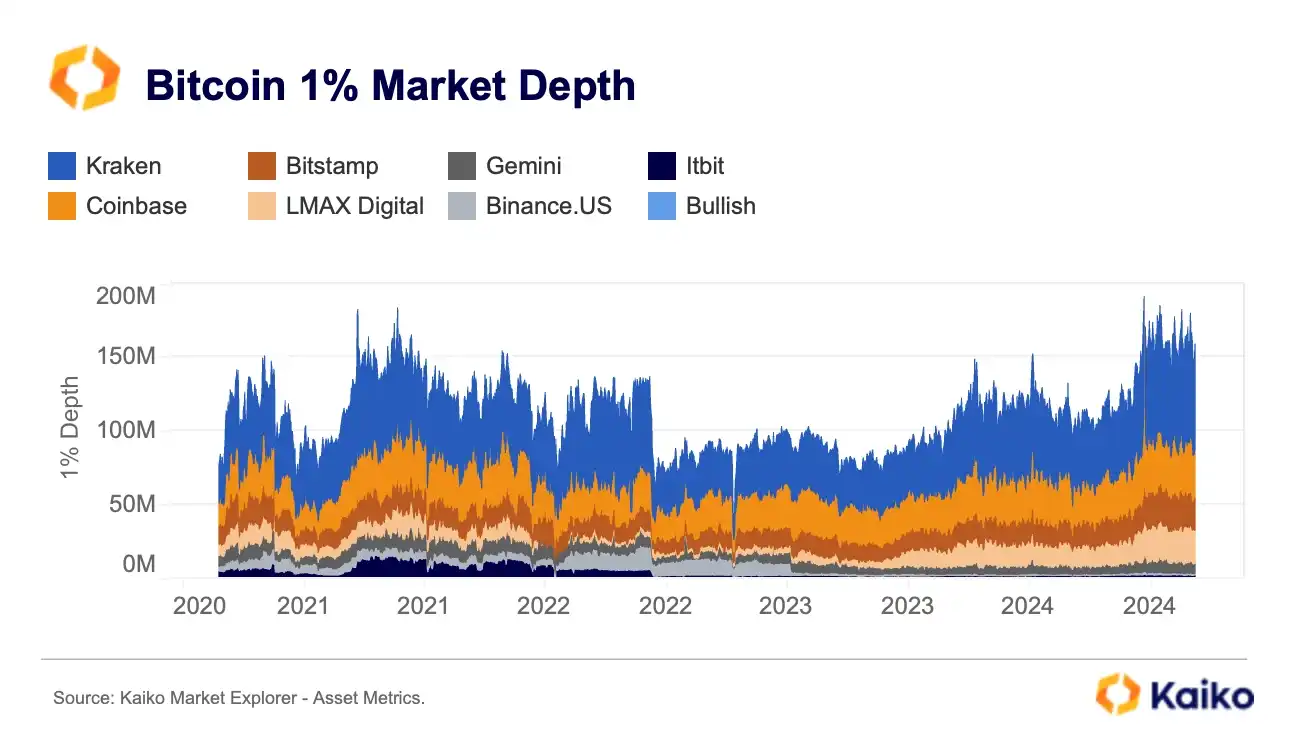
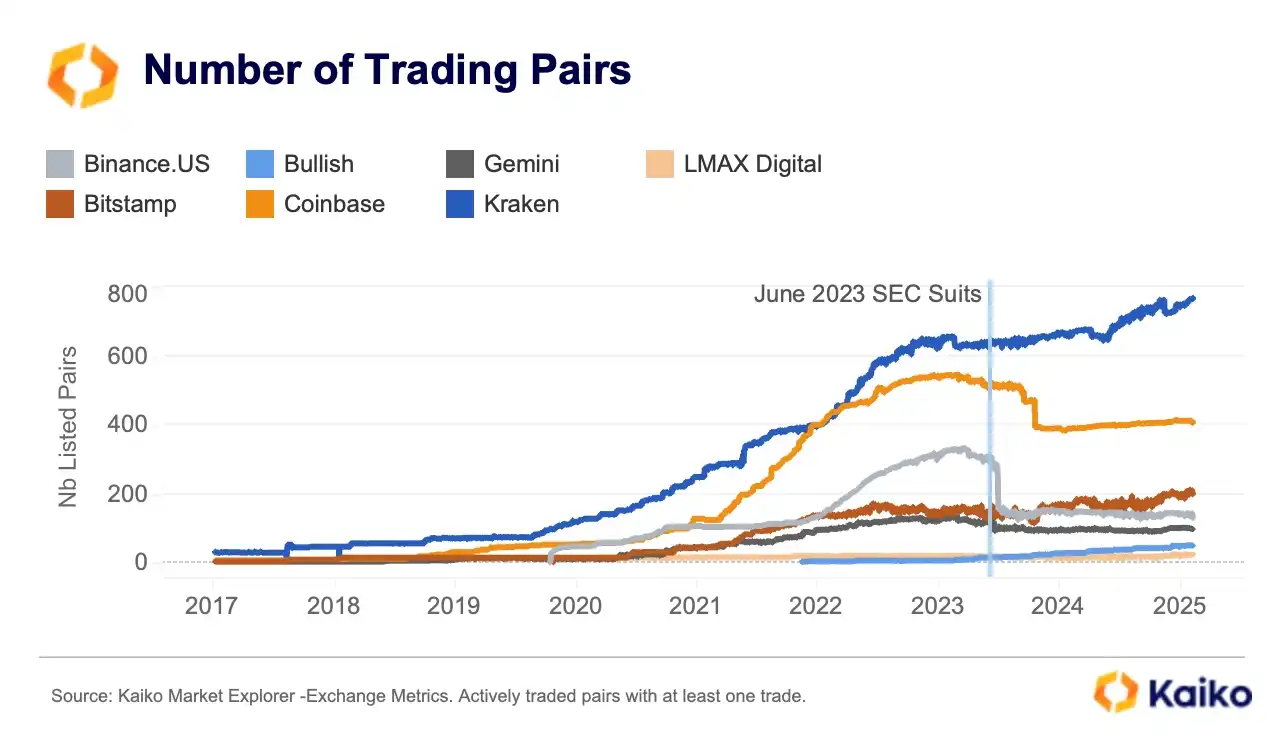
Furthermore, despite Coinbase continuously expanding its product offerings and benefiting more from cross-product synergies, the listing activity of new assets has significantly slowed down due to the influence of the strict U.S. regulatory environment.
The graph below shows that since the SEC filed lawsuits against Binance.US and Coinbase in June 2023, the number of active trading pairs on both platforms has seen a significant decline. However, if the regulatory environment improves in the future, Coinbase may accelerate its listing pace again, which could also enhance its attractiveness to retail traders.
Data Points
USDC Trading Volume Hits All-Time High: Binance Leads
Binance has now become the world's largest USDC trading market, with a weekly trading volume of $24 billion in January 2025, accounting for 49% of the global USDC total trading volume. This is the highest market share since September 2022. This significant growth is attributed to Binance's strategic partnership with Circle at the end of 2024, aimed at promoting wider adoption of USDC.
In contrast, Bybit's market share has significantly decreased, dropping from 38% in October 2023 to the current 8%.
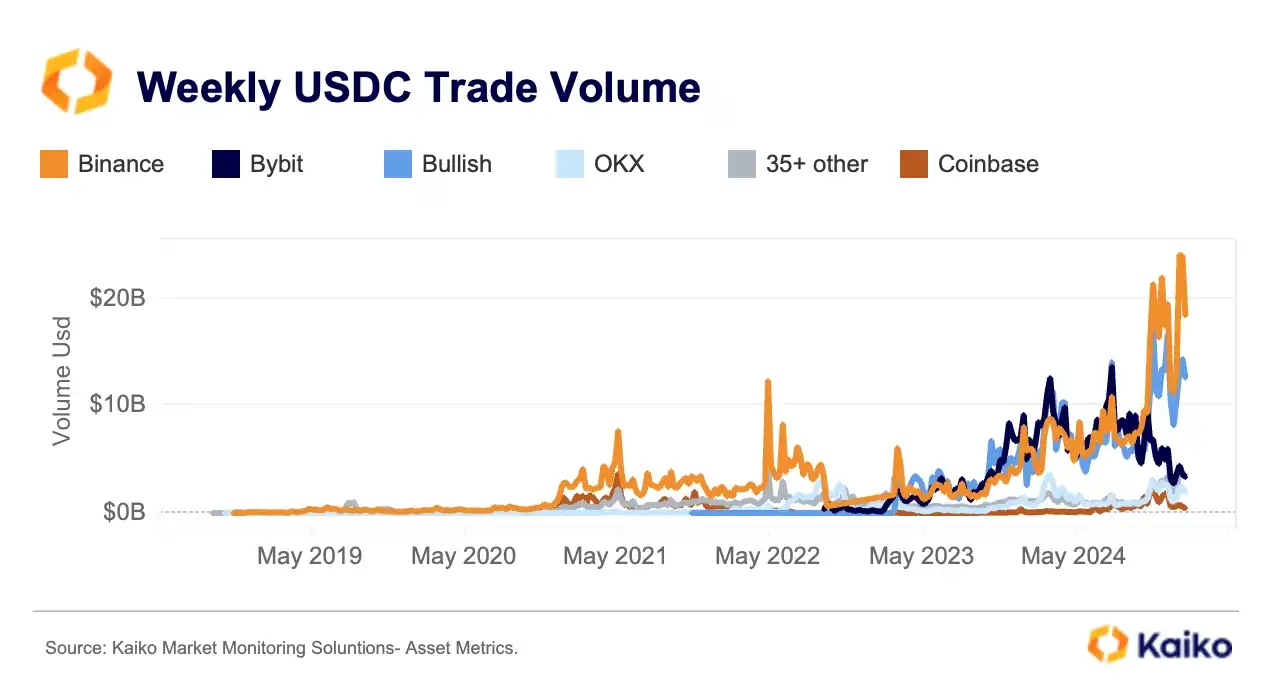
At the same time, the Bullish platform has rapidly emerged as one of Binance's key competitors, holding a 32% market share.
This shift in market dynamics is also reflected in the intensifying competition among stablecoins. Data shows that the proportion of newly listed USDT quoted trading pairs has decreased from 77% in 2023 to below 63% in 2024, and as of 2025, this proportion has further dropped to 50%.
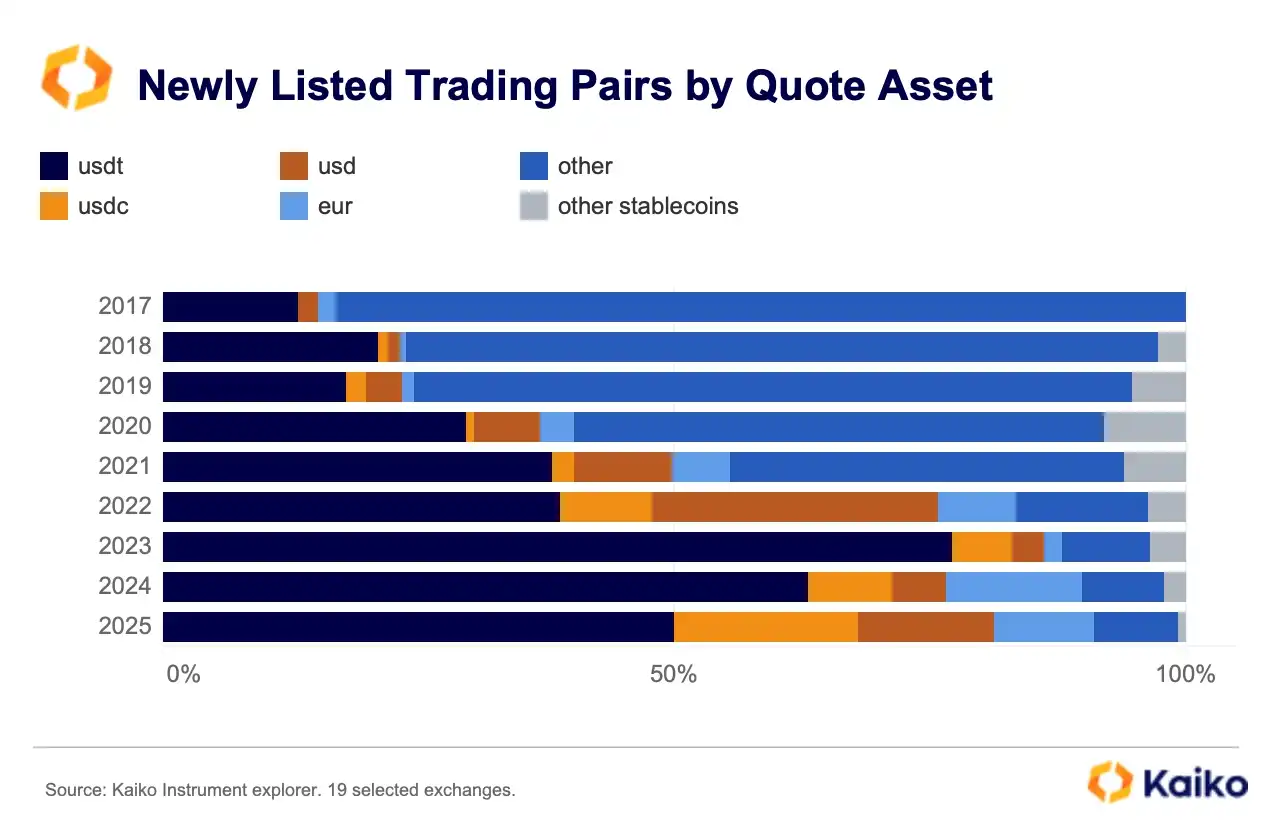
It is worth noting that euro-denominated trading pairs are gradually gaining market attention. This may indicate that the European market is experiencing a revival following the implementation of the MiCA regulation in 2024. For a more detailed analysis of euro market trends, please refer to our latest research report.
Shanzhai Liquidity: The Rise of Centralization Trend and Small Tokens
Since the U.S. election, the market's outlook and sentiment toward meme coins have significantly improved. This positive sentiment has driven a large number of new meme coin ETF applications and has also led to a surge in trading activity.
Data shows that the daily liquidity metric for meme coins (measured by the 1% market depth of the top 50 tokens) has nearly doubled since September 2023, reaching $9.6 billion.
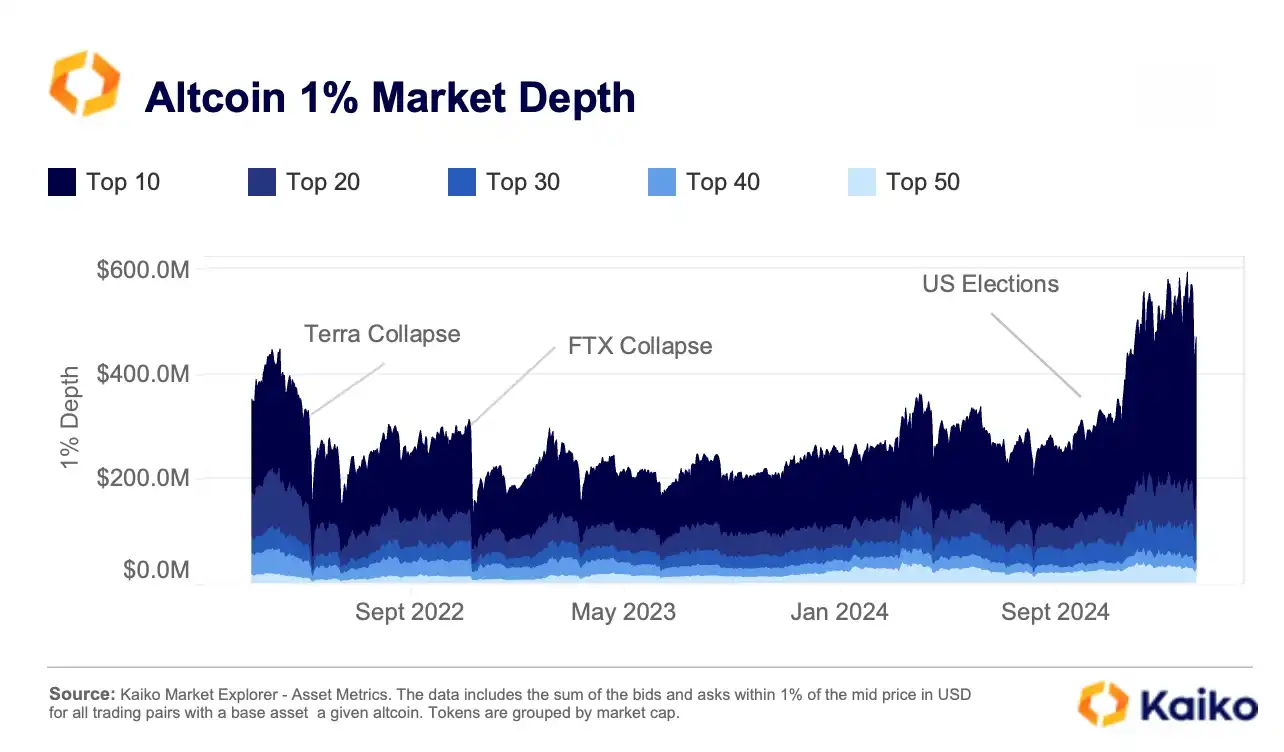
However, liquidity distribution is not uniform, still highly concentrated in the top 10 memes, which account for 64% of the total market depth. In contrast, mid-cap tokens (ranked 20–30) have seen a decrease in liquidity share, while small-cap tokens (ranked 50) have shown unexpectedly strong growth, with their liquidity share even surpassing the higher-cap group (ranked 40).
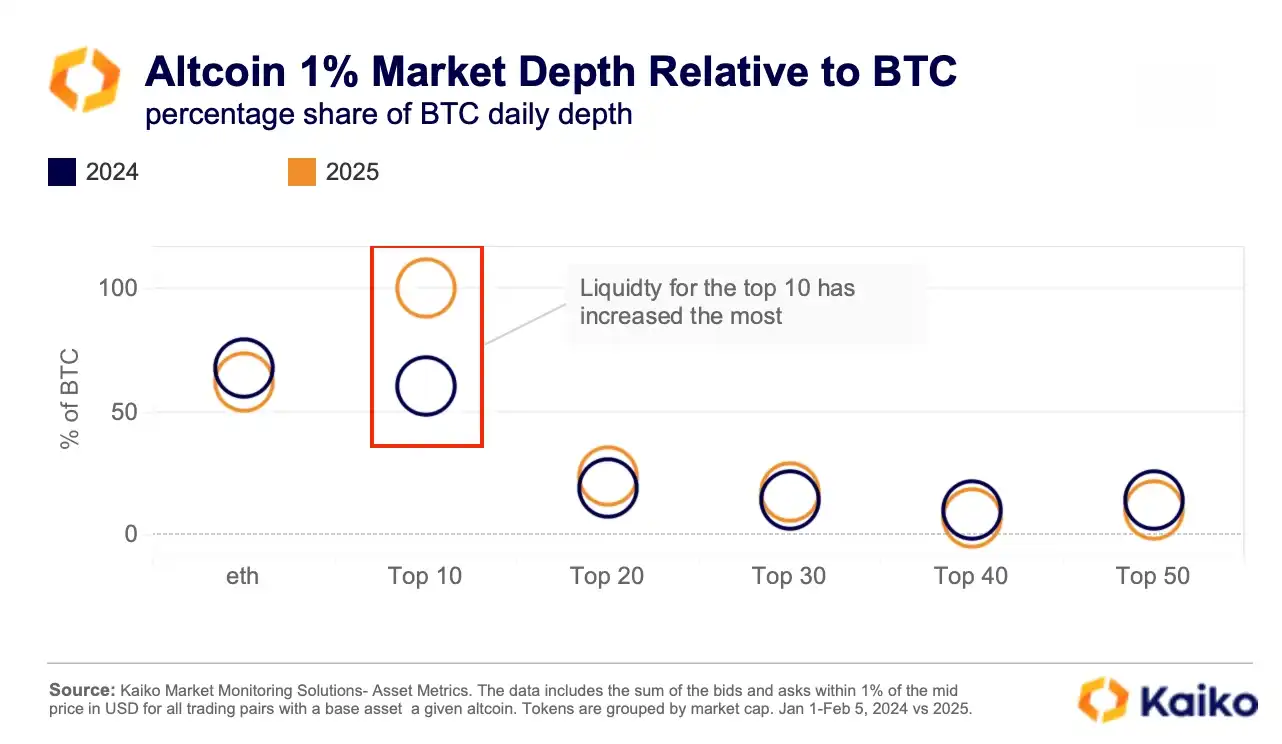
Nevertheless, market liquidity remains highly concentrated, with the top 10 meme coins occupying 64% of the total market depth. In comparison, mid-cap tokens (ranked 20–30) have seen a decrease in market share, while small-cap tokens (ranked in the top 50) have unexpectedly experienced growth, with their liquidity share even surpassing tokens with higher market caps (ranked in the top 40).
You may also like

Raising interest rates to protect STRC and selling coins to maintain credit, this time the strategy has chosen the two most expensive paths
Why Is Bitcoin Lagging Stocks in 2026? AI Stocks, ETF Outflows, and the Nasdaq Rally Explained
Morning Report | Samsung announces a 265.5 trillion won investment plan, focusing on semiconductor and AI computing power data centers; Vitalik publishes an article detailing the entire technology tree behind the confusion protocol (iO) mainline
What you bought on CEX is really not US stocks: Analyzing the 94% liquidation monopoly and the evaporation of equity under a five-layer pipeline
In such a crowded cross-border payment arena, where is the next stop for the future?
Why Is Bitcoin Down in 2026? What We Can Learn From 2022
The large models in the United States are moving towards closure in the name of security
From the white-haired stock god to the billionaire fund mogul, the smart people shorting Nvidia are all getting rich using the same framework
Morning Report | CoinEx becomes a key hub for Iran to evade sanctions, involving over $3.8 billion in funds; Kalshi seeks a new round of financing, with a valuation potentially rising to $40 billion
Global Launch: As predictions become the most scarce asset in the AI era, Manadia is defining the next generation of the value internet
Why do cryptocurrency projects always like to change their names?
Who is footing the bill for the $64 billion accounting frenzy?
I never expected that the first application of AI x Crypto would be in security auditing
What is your view on Binance's competitive advantages?
ETH has entered a non-consensus phase, and the turning point is approaching!
The shift in the cloud of the air: from despising stablecoins a year ago to the high-profile entry of capital today
The survival dilemma of small and medium exchanges behind the withdrawal anomalies exposed by AscendEX
Why Is Bitcoin Falling Below $60K? 5 Key Market Drivers Explained
Bitcoin has dropped sharply amid ETF outflows, Strategy stock weakness, AI stock rallies, and changing Fed expectations. Explore the key forces driving BTC’s latest correction and what traders should watch next.
Raising interest rates to protect STRC and selling coins to maintain credit, this time the strategy has chosen the two most expensive paths
Why Is Bitcoin Lagging Stocks in 2026? AI Stocks, ETF Outflows, and the Nasdaq Rally Explained
Morning Report | Samsung announces a 265.5 trillion won investment plan, focusing on semiconductor and AI computing power data centers; Vitalik publishes an article detailing the entire technology tree behind the confusion protocol (iO) mainline
What you bought on CEX is really not US stocks: Analyzing the 94% liquidation monopoly and the evaporation of equity under a five-layer pipeline
In such a crowded cross-border payment arena, where is the next stop for the future?
Why Is Bitcoin Down in 2026? What We Can Learn From 2022