
Flagship Project Community Plans "Palace Intrigue," Community Outrage Sweeps Over Ethereum Foundation

Original Title: "Top Projects Jointly Pressure Ethereum Foundation, No Response"
Original Author: Azuma, Odaily Planet Daily

The Ethereum Foundation (EF) has been in a world of suffering for a long time.
As disappointment with ETH's weak performance in this cycle gradually accumulated within the community and finally erupted, the calls for reforming the EF grew louder.
Over the past few days, the entire Ethereum community has been discussing EF's leadership structure, personnel composition, operational mode, and financial plans. The current EF Executive Director, Aya Miyaguchi, has been criticized by the community, and even Vitalik himself, under heavy pressure, had to publicly declare a "large-scale restructuring of the EF leadership."
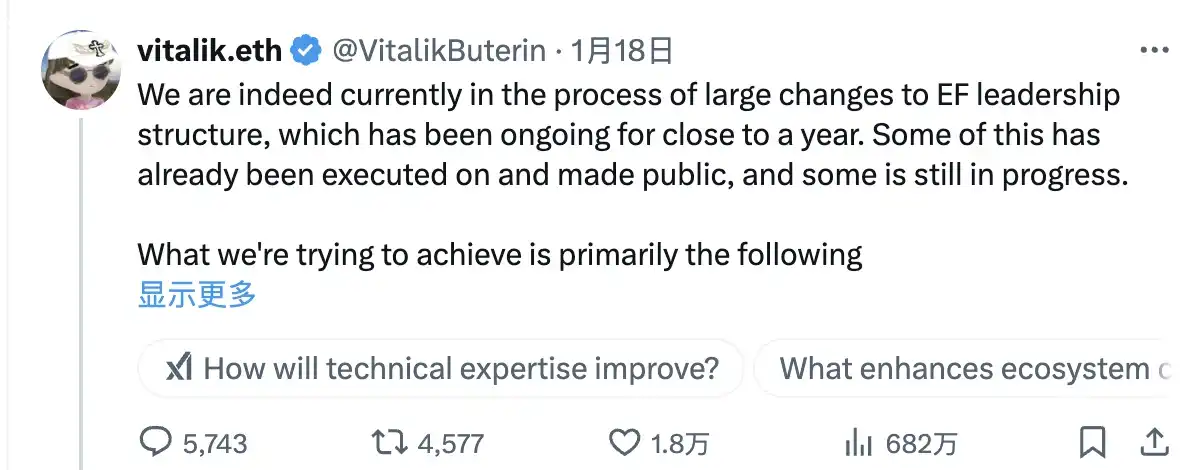
By the time Monday came, the discussion deepened further. Founders and executives of several top Ethereum ecosystem projects one after another made statements, denouncing various wrongdoings of the EF. The intensity of their remarks shows that major project parties have also long been dissatisfied with Ethereum's performance.
Below is a collection of various opinions compiled by Odaily Planet Daily.
Synthetix, Infinex Founder: EF Should Require L2 to Use Revenue for ETH Buyback
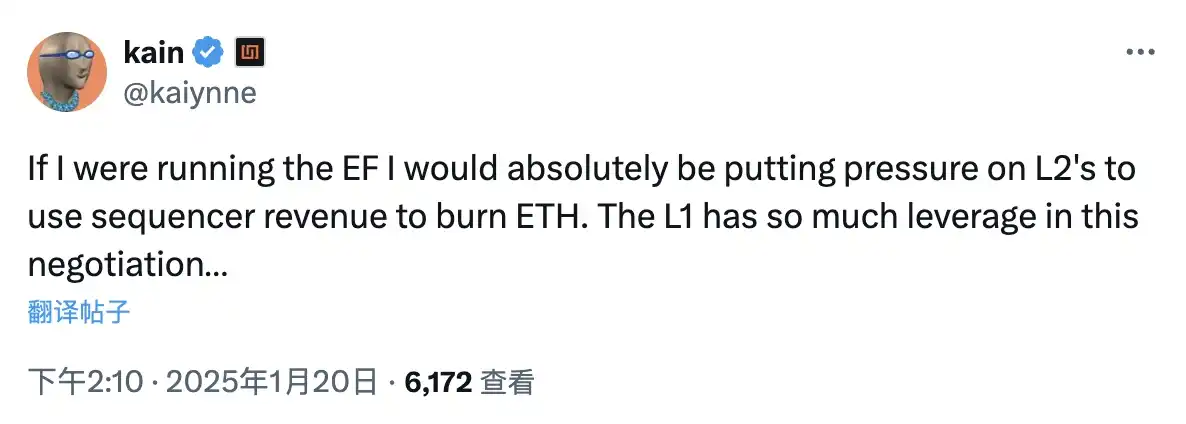
Synthetix, Infinex founder Kain Warwick was the first to challenge.
On Monday afternoon, Kain posted on X, saying: "If I were to operate the EF, I would definitely put pressure on Layer 2, requiring them to use sequencer revenue to burn ETH. Ethereum has a significant advantage in this negotiation...".
Curve Founder: EF Should Immediately Abandon L2 Strategy
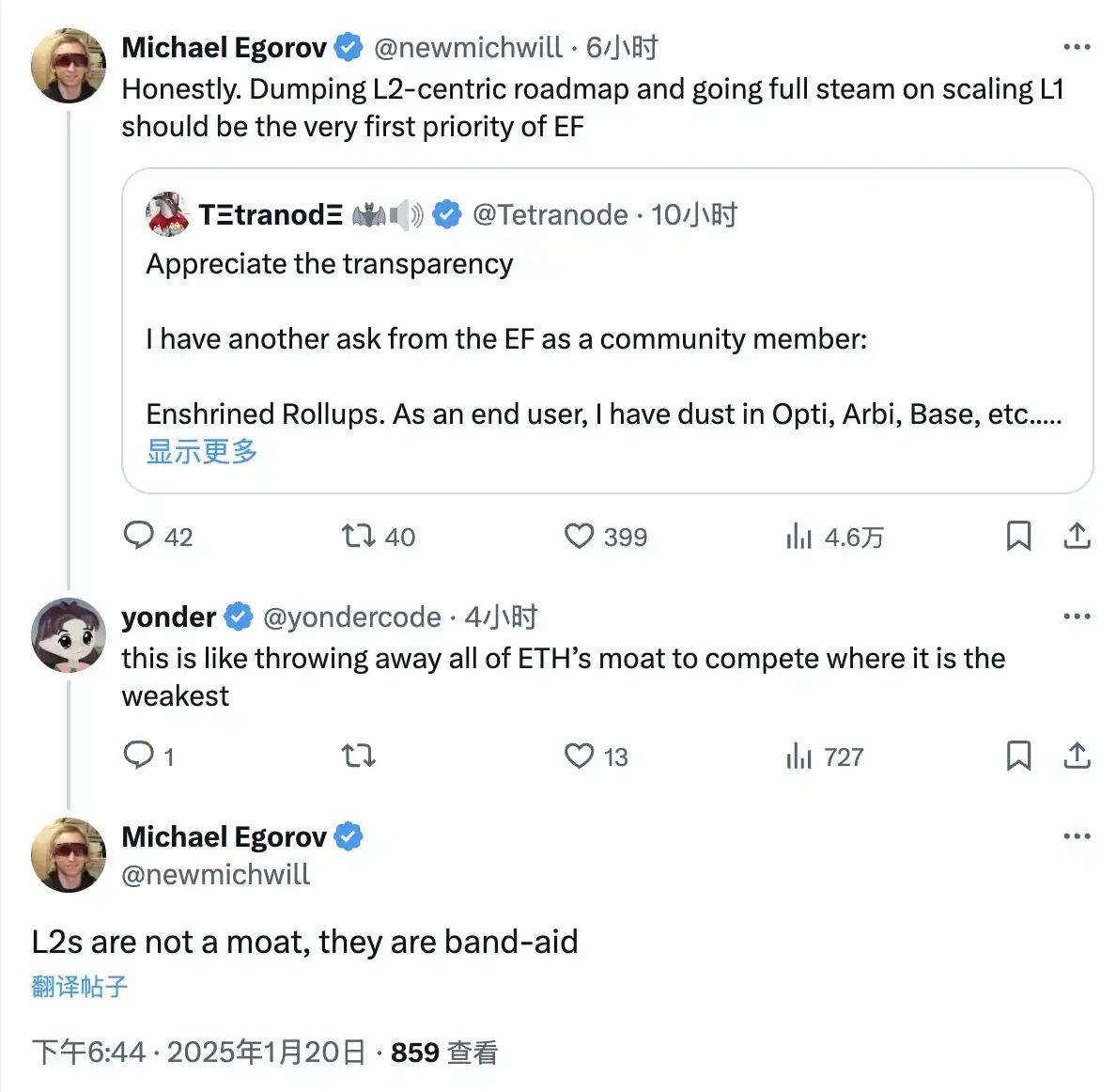
Following Kain, Curve Finance founder Michael Egorov also came out attacking Layer 2, but his wording was more aggressive.
On Monday afternoon, Egorov posted on X, stating that EF's top priority should be to abandon the L2-centric roadmap and instead focus on expanding Layer 1.
In a discussion with the community later, Egorov also bluntly stated, "Layer 2 is not a moat, but a Band-Aid."
Aave Founder: 12 Steps to Rescue EF
Later in the evening, Aave founder Stani Kulechov posted a lengthy article on X stating that he had read the EF Annual Budget Report and believed that the EF needed thorough reform in 12 areas to achieve better sustainability:
1. Immediately reduce the burn rate from $130 million to $30 million;
2. Reduce the number of employees to 80;
3. Carefully review who can stay. Remove senior positions, advisors, any part-time roles, interns, freeloaders, cockroaches, and parasites;
4. Prohibit advisors or any conflicts of interest;
5. Ensure that 80% of employees are technical personnel;
6. Split all technical teams into small 5-person teams, each focusing on specific areas and expertise;
7. The leadership should be a 5-person committee, selected based on performance, with one serving as chairman, responsible to VB;
8. Part of the non-technical team should focus on financial management (handled internally);
9. Diversify finances into various Long-term Sustainable Tokens (LRSTs), as well as fundamentally sound and profitable DeFi and non-DeFi projects built on Ethereum;
10. Diversify staking rewards into stablecoins and invest funds in DeFi;
11. Manage the financials with Aave borrowings and sell periodically when ETH outperforms other assets;
12. Create a sustainable revenue model from transaction or staking fees to fund a reasonable EF budget.
Former Growth Lead at Ethena: EF Should Focus on DeFi
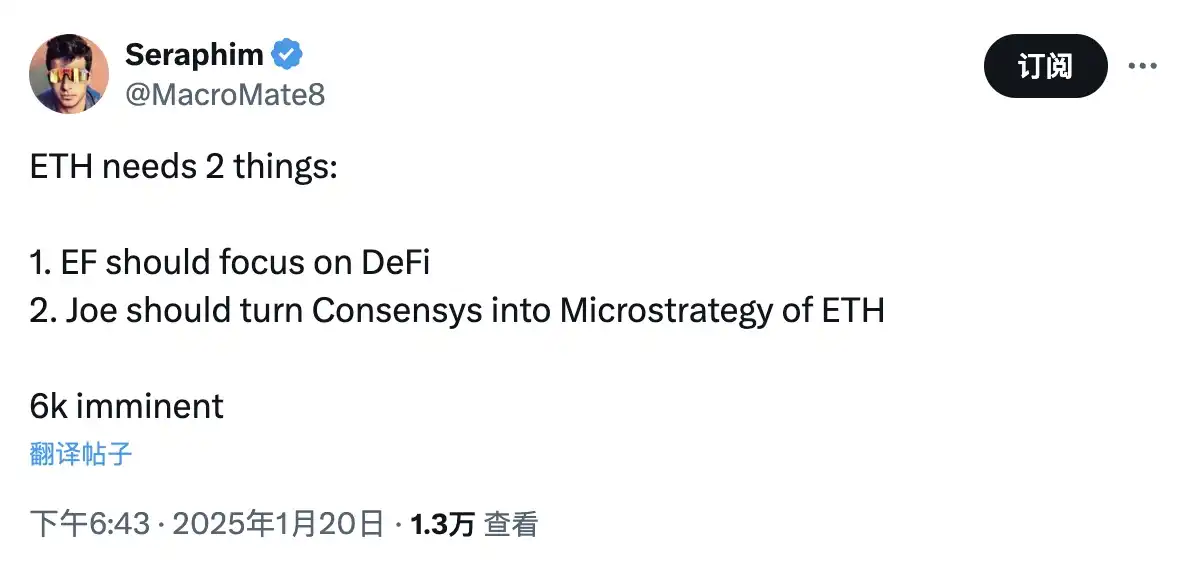
Recently resigned Former Growth Lead at Ethena, also the former Expansion Lead at Lido, Seraphim, also shared his views on EF reform.
Seraphim mentioned that Ethereum needs two paths to self-rescue: first, the EF should focus on DeFi, and second, Consensys, led by Ethereum co-founder Joseph Lubin, should emulate Microstrategy's approach to BTC. As long as these two points can be achieved, ETH will quickly surpass $6000.
Wintermute Founder: Ethereum's Potential Death Spiral Risk
Industry-leading market maker Wintermute, while not exclusive to the Ethereum ecosystem, has directly provided liquidity to many Ethereum ecosystem projects, making its stance equally impactful on Ethereum.
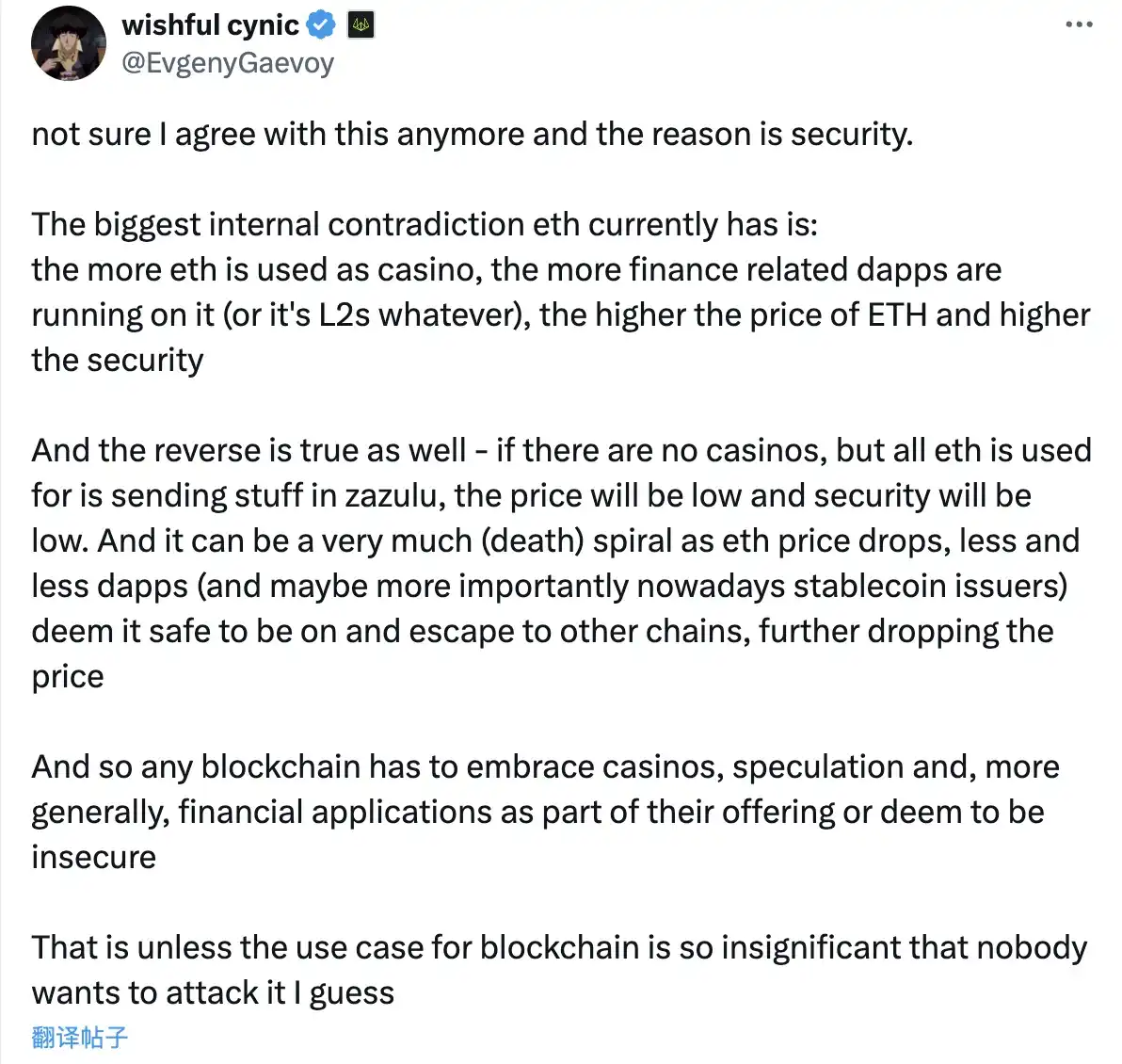
Last night, founder and CEO Evgeny Gaevoy wrote about the potential death spiral risk for Ethereum.
Evgeny stated that Ethereum's biggest internal contradiction currently is: the more ETH is used for "gambling," and the more finance-related dApps run on Ethereum, the higher the price of ETH and the higher the security; conversely, if there is no gambling behavior and ETH is only used for transfers on Zazulu, then the price of ETH would be very low, and the security would also be low. As the price of ETH drops, dApps that still consider Ethereum secure will increasingly move to other chains, further lowering the price of ETH, which could lead to a significant death spiral.
Therefore, any blockchain must consider gambling, speculation, and broader financial applications as part of its product, or else it will be seen as insecure.
Amidst Public Outrage, EF Once Again Chooses to Sell...
During a period of community outcry and unrelenting public anger, the EF has once again made a surprising move.
At around 6:20 PM, the address 0xd77...1f4, known for small-value high-frequency ETH sales, once again sold 100 ETH at an average price of $3364.
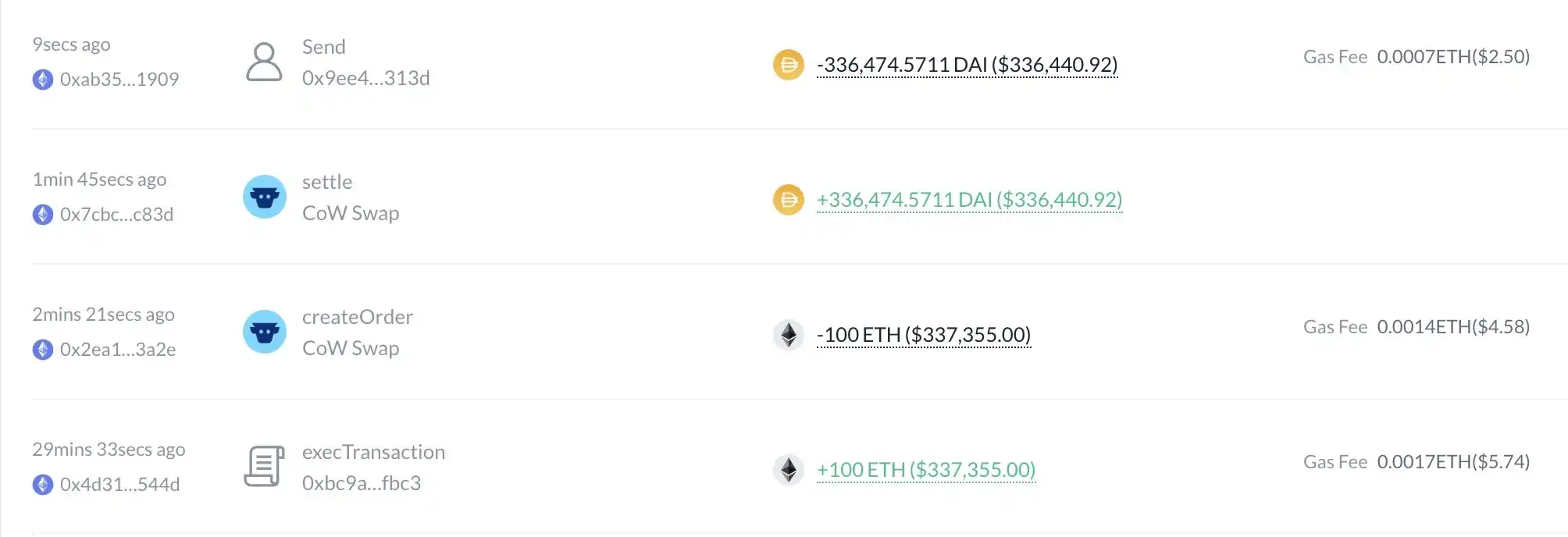
As a long-time ETH holder, I find it hard to understand why the EF would make such a "low-value but highly symbolic" move at such a sensitive time, especially when the community actively suggested that the EF use staking rewards instead of direct selling, and this proposal was also acknowledged by Vitalik as something to explore further.
You read that right; as the top-level organization in the Ethereum ecosystem, the EF hasn't even staked its ETH holdings. Vitalik's explanation for this is firstly concern about regulatory issues, and secondly, the EF's neutrality issue, as if the EF were to stake on its own, it would force them to take a stance on any future contentious hard fork.
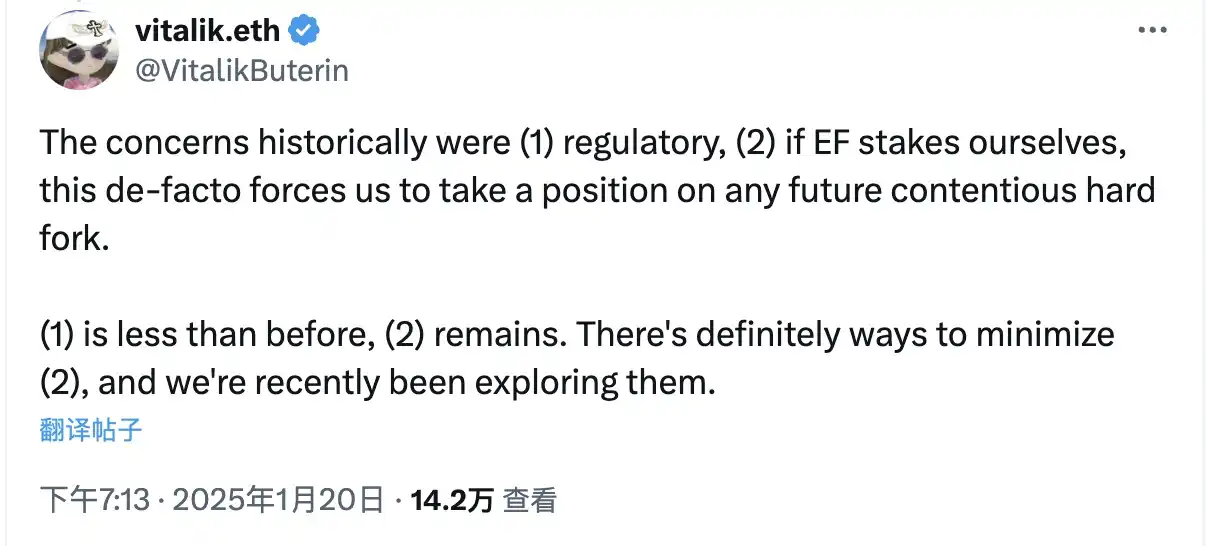
Not much to say about regulatory issues. In fact, with the overall relaxation of the regulatory environment, this has gradually become a non-issue.
As for the second point, does this explanation really hold water? With Solana breathing down their neck, competition has reached a do-or-die stage, yet the EF is still seemingly "avoiding suspicion" for some hypothetical future scenario.
Oh, by the way, the EF seems to be indifferent to competition — today the Ethereum community dug up Aya Miyaguchi's previous statement in an interview: "I am training people to say no to a culture of competition and winning."
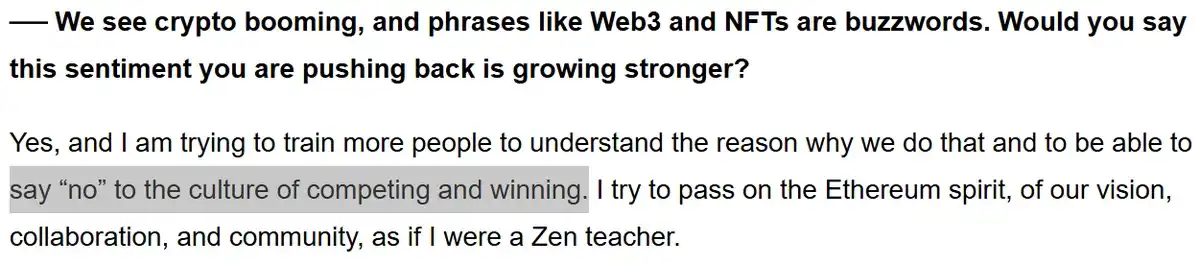
No comment; let's hope the day of real change comes soon.
You may also like

The large models in the United States are moving towards closure in the name of security

Morning Report | CoinEx becomes a key hub for Iran to evade sanctions, involving over $3.8 billion in funds; Kalshi seeks a new round of financing, with a valuation potentially rising to $40 billion

From the white-haired stock god to the billionaire fund mogul, the smart people shorting Nvidia are all getting rich using the same framework

Why do cryptocurrency projects always like to change their names?

Global Launch: As predictions become the most scarce asset in the AI era, Manadia is defining the next generation of the value internet

Who is footing the bill for the $64 billion accounting frenzy?
I never expected that the first application of AI x Crypto would be in security auditing

What is your view on Binance's competitive advantages?

ETH has entered a non-consensus phase, and the turning point is approaching!
The shift in the cloud of the air: from despising stablecoins a year ago to the high-profile entry of capital today
The survival dilemma of small and medium exchanges behind the withdrawal anomalies exposed by AscendEX
Why Is Bitcoin Falling Below $60K? 5 Key Market Drivers Explained
Bitcoin has dropped sharply amid ETF outflows, Strategy stock weakness, AI stock rallies, and changing Fed expectations. Explore the key forces driving BTC’s latest correction and what traders should watch next.

Bitcoin vs. Gold in 2026: Which Asset Performs Better in Different Markets?

Morning News | The draft amendment to the People's Bank of China Law aims to clarify the legal status of digital renminbi; South Korea will transfer about 40 unregistered virtual asset service providers to law enforcement agencies
The cryptocurrency industry has entered the "Show Me" era: merely relying on vision is no longer enough

Interpreting the Ethereum Foundation's new structure: Reaffirming self-sovereignty amid institutional trends
Former SpaceX engineer reconstructs the financial execution system using first principles
Standard Chartered Bank sings a 50x rhapsody again, aiming for AAVE to reach 3500 USD
The large models in the United States are moving towards closure in the name of security
Morning Report | CoinEx becomes a key hub for Iran to evade sanctions, involving over $3.8 billion in funds; Kalshi seeks a new round of financing, with a valuation potentially rising to $40 billion
From the white-haired stock god to the billionaire fund mogul, the smart people shorting Nvidia are all getting rich using the same framework
Why do cryptocurrency projects always like to change their names?
Global Launch: As predictions become the most scarce asset in the AI era, Manadia is defining the next generation of the value internet
Who is footing the bill for the $64 billion accounting frenzy?


